


The Case of a Former Olympian and Workplace Discrimination
A former Olympic athlete has made headlines after claiming she was forced to resign from her high-paying job at an energy company due to ongoing sexism in the workplace. However, her case was recently dismissed by the Fair Work Commission (FWC).
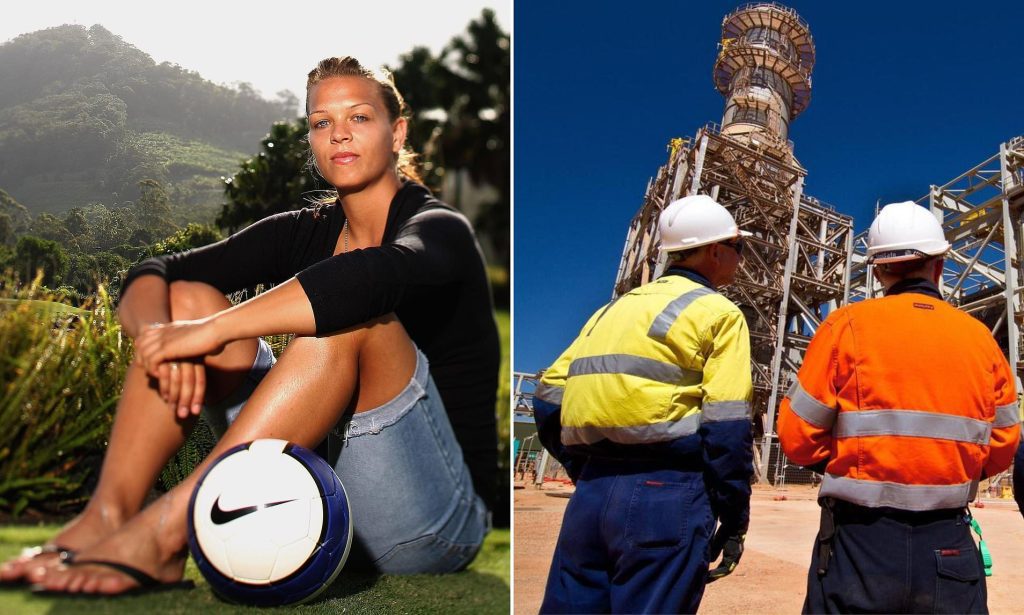
Thea Slatyer, a former captain of the Australian women’s national soccer team, the Matildas, was employed by Chevron in August 2023 as the only female area inspector on the Gorgon LNG project at Barrow Island. A year later, she resigned, citing a hostile work environment marked by persistent gendered language and exclusion.
During her time at the site, Slatyer reported being subjected to repeated use of terms such as “gents,” “fellas,” “lads,” and “brothers.” She also claimed to have been excluded from critical work communications and assigned less complex tasks. In her statement to the FWC, she described the experience as mentally exhausting and unwelcoming.
“Nearly all instances, I have had to continually address and confront usually alone, and each time this has been an unpleasant and an unwelcoming experience which is wearing me down mentally,” she said.
Slatyer highlighted that during one particular shift, she had to correct four male colleagues on five separate occasions to include her in their language. Despite her efforts to address these issues, she felt they continued to impact her ability to contribute fully and effectively.
She argued that the site’s culture was a major barrier to improving diversity and undermined Chevron’s efforts to retain women in the workforce. Slatyer noted that the environment was historically all-male and ego-driven, leaving her feeling unsafe, excluded, and unsupported.
According to her claims, Chevron failed to respond to formal complaints and did not implement effective anti-harassment measures. This, she said, created a pattern of bullying that led to stress, headaches, loss of sleep, and frequent medical consultations.
In her final months on Barrow Island, Slatyer reported being spoken over or ignored in meetings and subjected to ongoing verbal, gendered, and exclusionary language from male staff. After consulting with the onsite medic, she returned to Perth in August 2024 and requested extended leave without pay, either to focus on her studies or to transfer to another role at a different site.
The following month, Chevron offered Slatyer the opportunity to work from the Perth office for her next swing. However, she expressed dissatisfaction with the offer because it did not provide assurances that the issues would be resolved.
Chevron’s human resources manager, Rebecca Ricci, responded that unconscious gender bias is an industry-wide challenge and would take time to improve. Meanwhile, FWC deputy president Gerard Boyce stated that Slatyer rejected Chevron’s offer to work in the Perth office temporarily while her concerns were addressed.
He emphasized that a forced resignation requires there to be no other option. According to him, Slatyer failed to demonstrate any action on Chevron’s part that could be objectively said to have left her with no choice but to resign.
Boyce noted that during her employment, Slatyer was supported, including by being provided with flexibility to manage commitments outside of work. He also mentioned that she knew she was a valued member of the team.
Chevron had in place measures to support its commitment to providing a safe, inclusive, and respectful workplace. The FWC pointed out that the fact Slatyer encountered unconscious gender bias, where individual employees unintentionally used gendered language during workplace interactions, cannot be used as a foundation for a forced resignation.
The evidence, according to the FWC, does not support a finding that Slatyer’s complaints regarding conscious or unconscious gender bias were ignored, dismissed, or trivially addressed. Any concerns or complaints raised with supervisors were respectfully considered and engaged with.
Options reasonably available to Slatyer included working from the Perth office, engaging in further discussions, requesting a formal investigation, or lodging an external complaint.