


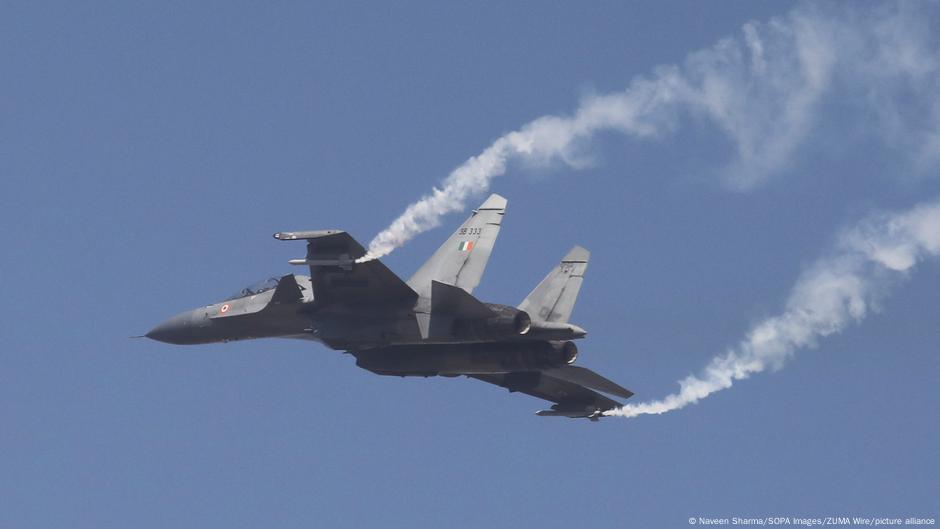
The Struggles of India’s Air Force: A Legacy of Challenges
India’s air force has long been a symbol of national pride, but it now faces a series of deep-rooted challenges that threaten its operational readiness and modernization. After decades of service, the Indian Air Force (IAF) is retiring the last of its MiG-21 jets, which were introduced in the 1950s. These aircraft, once considered a cornerstone of India’s aerial defense, have been plagued by numerous crashes and safety concerns, earning them the nickname “flying coffin.” Their retirement marks the end of an era, but it also highlights the IAF’s growing struggle to maintain a robust and modern fleet.
A Shrinking Fighter Squadron Strength
One of the most pressing issues for the IAF is its dwindling fighter squadron strength. A typical squadron consists of between 18 and 24 aircraft, but India will soon be operating with only 29 squadrons, far below the sanctioned number of 42. This shortfall is a direct result of delays in acquiring new aircraft and the aging fleet. With the MiG-21s set to be retired in September, the IAF will face a significant gap in its capabilities, especially when compared to regional rivals like Pakistan and China.
The IAF currently has 29 squadrons, while the Pakistan Air Force (PAF) operates around 25 squadrons, and the Chinese People’s Liberation Army Air Force (PLAAF) boasts over 66. This disparity raises serious concerns about India’s ability to defend itself in the event of a conflict. Analysts warn that the PLAAF has been modernizing at a rapid pace, giving it a significant edge over the IAF in terms of technology and combat readiness.
Efforts to Modernize and Replenish
India has made efforts to address these shortcomings by investing in indigenous defense manufacturing. One of the key projects is the Light Combat Aircraft (LCA) program, which aims to replace the MiG-21 with the HAL Tejas. However, this project has faced numerous delays and technical challenges. Despite being launched in 1983, only 38 Tejas Mark 1A fighters have been inducted into the IAF so far. The government recently approved a deal worth $7.2 billion to acquire 97 Tejas Mark 1A fighters, but the timeline remains uncertain.
A major obstacle for the Tejas program is the reliance on imported engines from U.S.-based GE Aerospace. This dependency has slowed down production and raised questions about the feasibility of full indigenization. Experts argue that the focus should shift toward developing more advanced variants, such as the Tejas Mark 2, which would offer greater capabilities and adaptability in modern warfare.
International Acquisitions and Strategic Partnerships
In addition to domestic efforts, India has also sought to bolster its air force through international acquisitions. The country had initially planned to procure 114 multi-role fighter aircraft (MRFA) through a global tender, but this project has been delayed. Recent discussions suggest that the acquisition may now involve a government-to-government deal, potentially including French Rafales and Russian Su-35 and Su-57 fighters.
These strategic partnerships highlight the complex web of defense relations that India maintains with various countries. While Russia remains a major defense partner, the U.S. has also become an important player in recent years. However, rising tensions between the U.S. and India, particularly over trade policies and defense procurement, have cast a shadow over future collaborations.
Concerns Over Tariffs and Trade Relations
The recent announcement of increased tariffs on Indian goods by the U.S. has further complicated the situation. President Donald Trump has threatened to raise tariffs to 50% over India’s purchases of Russian oil and its refusal to accept U.S. trade terms. While the immediate impact on the defense sector remains unclear, analysts believe that the U.S. and India still have strong strategic ties, and alternative options such as Russian and French aircraft remain viable.
Despite these challenges, India continues to explore ways to strengthen its defense industry. Some experts argue that the private sector must play a more active role in defense production, as public sector units have struggled with inefficiency and technological stagnation.
A Call for Better Planning and Reform
The root cause of many of the IAF’s problems lies in poor planning and coordination. Analysts emphasize the need for a specialized organization focused on long-term defense strategy, rather than relying solely on military input. Former financial advisers and defense experts have called for reforms that prioritize operational readiness over political or bureaucratic considerations.
As India navigates these challenges, the path to a modern and capable air force remains uncertain. The combination of outdated equipment, procurement delays, and geopolitical complexities continues to test the resilience of the IAF. However, with renewed focus on self-reliance and strategic partnerships, there is hope that India can eventually build a fleet that meets the demands of modern warfare.