


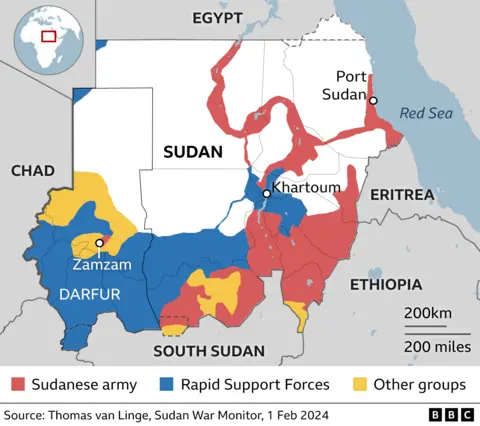
A Call for Peace in Sudan
A renewed effort to bring peace to Sudan has gained momentum in Nairobi, where African and international leaders emphasized that the country’s two-year conflict cannot be resolved through military means. Instead, they called for an urgent political settlement led by the African Union.
The high-level forum, organized by the Kofi Annan Foundation, the Ambassador Amina Live Foundation, and the Maghreb Media Centre, aimed to reinvigorate stalled peace initiatives and draw global attention to what is being described as one of Africa’s most severe humanitarian crises in recent decades.
No Military Victory in Sudan
Speakers at the event dismissed the possibility of a military solution, pointing to repeated failures of previous efforts such as the Jeddah talks in mid-2023, the Manama negotiations later that year, and the Geneva discussions in early 2025. They accused Sudan’s army of obstructing these initiatives and urged both warring factions and their affiliated militias to cease hostilities.
Delegates also highlighted the serious abuses committed against civilians by all sides and called for immediate access to humanitarian aid across the country. The situation on the ground has been marked by widespread displacement, with millions forced to flee into neighboring countries.
A Humanitarian Catastrophe
Former Kenyan Foreign Affairs CS Amina Mohamed described the war as a catastrophic humanitarian crisis. She stressed that the only way to end the conflict is through a credible and inclusive political process. She called on the international community to raise awareness, provide more support for peace, and encourage dialogue among Sudanese actors.
The impact of the war extends far beyond Sudan’s borders. Former South Sudan foreign minister Barnaba Benjamin warned that the conflict risks destabilizing the entire region. He pointed to the spread of extremist groups and Islamist militias as key factors prolonging the war. He also cautioned that the emergence of rival governments could worsen the crisis but expressed hope that the African Union would play a stronger role in shaping a peaceful resolution.
Militias and Extremism Fuel the Conflict
Khalid Omar Yousif, former Sudanese cabinet affairs minister and leader of the Sumood Alliance, highlighted the growing threat posed by militias and extremist factions. He accused the Sudanese army of using chemical weapons and called for an international investigation into these allegations. He also warned that collapsing essential services—such as food, healthcare, education, electricity, and clean water—are pushing the country toward collapse.
Yousif criticized the use of hate speech, racism, and calls for separation by Islamists, which he said are fueling the war. He emphasized the need for a political solution to address these underlying issues.
Sudan’s Forgotten War
Mongi Hamdi, former Tunisian foreign minister and ex-UN envoy to Mali, lamented that Sudan’s war has become a “forgotten conflict” despite its devastating human toll. He warned that foreign militias from Ethiopia and Chad are further destabilizing the country and insisted that only a political solution can bring lasting peace.
The forum concluded with a strong call for political negotiations, regional unity, and increased international engagement. A final communiqué stated: “The people of Sudan have suffered enough. Continued reliance on military solutions only deepens the cycle of violence, destruction, and despair. No battlefield victory can bring peace, justice, or stability to Sudan—only a comprehensive political solution can achieve that.”
The Humanitarian Toll
According to the UN Office for the Coordination of Humanitarian Affairs (OCHA), over 10 million Sudanese have been displaced since the war began. Fighting in Kordofan and Darfur has left more than 500,000 people trapped in camps, while an estimated 75% of women face severe health and protection risks.
Shortages of food, medicine, education, electricity, and clean water continue to worsen, and the unchecked spread of weapons and militias is driving the country deeper into chaos. The humanitarian situation remains dire, with no signs of improvement in the near future.
The call for a political solution is growing louder, as leaders from across Africa and the international community recognize that only through dialogue and cooperation can lasting peace be achieved in Sudan.