


Polish and NATO Forces Engage in Airspace Defense Amid Russian Aerial Attack on Ukraine
Polish and NATO forces have taken decisive action to defend the country’s airspace following a series of drone incursions linked to a Russian aerial attack on neighboring Ukraine. This marks the first time that Polish and NATO military assets have been directly involved in the ongoing conflict, signaling a significant escalation in regional security concerns.
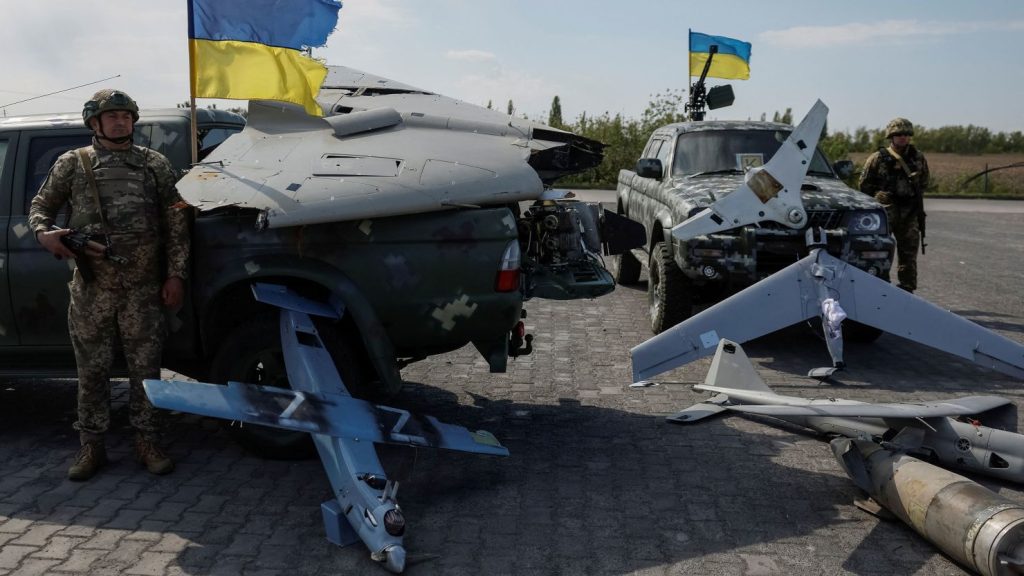
The incident unfolded early on Wednesday when over a dozen drones entered Polish airspace. In response, fighter jets were scrambled as part of an immediate defensive measure. The Polish military confirmed that weapons were used against the objects, with operations underway to locate any downed targets. The situation was described as a “large-scale provocation” by Polish Prime Minister Donald Tusk, who emphasized that the drones originated from Russia.
Airspace Security Measures
To ensure the safety of its skies, the Polish military mobilized both air and ground-based defense systems. Allied aircraft were deployed to patrol the airspace, while radar and air defense systems were brought to their highest state of readiness. The Operational Command of the Polish Armed Forces stated that these actions were taken in coordination with NATO forces to safeguard national interests.
Tusk also confirmed that an operation was underway to collect debris from the drones. Reports indicated that a drone or similar object struck a residential building in Wyryki, located in eastern Poland. Fortunately, no injuries were reported. Local authorities in the Lublin region noted the discovery of a damaged drone in the village of Czosnowka, with additional debris found in Czesniki.
Political and Military Responses
The incident has sparked strong reactions from both domestic and international leaders. Tusk highlighted his constant communication with NATO Secretary-General Mark Rutte and called for an emergency meeting of the Polish Council of Ministers. Defence Minister Wladyslaw Kosiniak-Kamysz confirmed that aircraft had used weapons against hostile objects, reinforcing the military’s commitment to defending the nation.
Ukraine’s foreign minister, Andrii Sybiha, accused Russia of testing the West’s willingness to respond to aggression. He emphasized that President Vladimir Putin continues to escalate the war and expand its reach, calling for enhanced air defense capabilities in neighboring countries to intercept drones and missiles near NATO borders.
President Volodymyr Zelenskyy condemned the incident as an “extremely dangerous precedent for Europe,” while EU Defence Commissioner Andrius Kubilius called for the development of a “drone wall” along the eastern flank of the European Union. He urged collaboration between member states, frontier countries, and Ukraine to counter the growing threat.
Impact on Civil Aviation
The military activity led to the temporary closure of four airports in Poland, including Chopin Airport in Warsaw, Rzeszow-Jasionka Airport, Warsaw Modlin Airport, and Lublin Airport. These closures were implemented to ensure safety during the operations. Passengers were advised to monitor airline and government updates for further information.
By early Wednesday, all airports except Lublin, which is close to the Ukrainian border, had reopened. However, the situation remains tense, particularly given the ongoing Russian-led military exercises in Belarus.
Border Closure and Regional Tensions
Poland announced plans to close its border with Belarus at midnight on Thursday due to the scheduled Zapad-2025 military drills. These exercises, involving Russia and Belarus, have raised security concerns among neighboring NATO members such as Lithuania and Latvia. The border closure was justified by Polish officials as a precautionary measure to protect citizens from potential threats.
Belarus reacted strongly to the decision, accusing Poland of “abusing its geographical position” and claiming that the closure was aimed at concealing its own actions rather than addressing real security risks. Meanwhile, Lithuania’s border guard announced increased security measures along its borders with Belarus and Russia.
Broader Implications
The incident underscores the growing complexity of the conflict in Eastern Europe. As Russia continues to test the resolve of Western allies, the involvement of NATO and Polish forces highlights the need for coordinated defense strategies. The events also reflect the broader geopolitical tensions that are shaping the future of European security.
With the situation evolving rapidly, the focus remains on ensuring the safety of civilians, strengthening alliances, and developing robust defense mechanisms to counter emerging threats. The actions taken by Poland and its allies serve as a clear signal that the West is prepared to respond decisively to any challenges posed by Russian aggression.