


Escalating Tensions on the Lithuanian-Belarusian Border
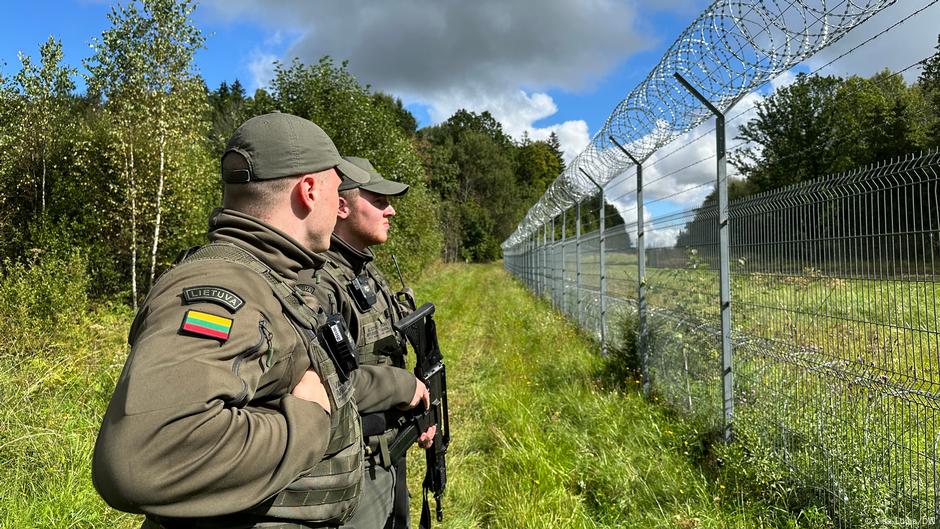
As Russia and Belarus prepare for joint military exercises, the border between Lithuania and Belarus has become a focal point of concern. The 600-kilometer-long border is marked by two metal fences, with the Lithuanian side equipped with barbed wire and surveillance cameras that rotate continuously. This heightened security reflects growing fears among Lithuanians about potential threats from Russia, especially since the full-scale invasion of Ukraine in February 2022.
The upcoming Zapad 2025 military exercises, scheduled from September 12 to 16, involve tens of thousands of soldiers from both countries. These exercises, which have been held every four years since 1977, are expected to include training with advanced weaponry, including Russia’s new Oreshnik missiles, which are reportedly capable of carrying nuclear warheads. This development has led to increased vigilance along the border, as Lithuanian border guards receive additional training and conduct more patrols during the exercises.
General Rustamas Liubajevas, head of Lithuania’s border control service, emphasized that Russia is now perceived as a potential aggressor. He warned of possible provocations, such as the use of migrants or aggressive actions at the border. In 2022, Russia was accused of deliberately bringing thousands of migrants to Belarus to cross into Poland and other EU countries, an act seen as an attempt to destabilize the region.
Liubajevas also mentioned the possibility of “hybrid attacks,” such as unauthorized border crossings or drone incursions. Drones have frequently violated Lithuanian airspace, with incidents reported in July when two drones crashed after entering the country from Belarus. Earlier this month, Russian drones were shot down in Polish airspace, highlighting the ongoing threat.
Strengthening Military Presence
In response to these concerns, Lithuania is increasing its military presence. The country is organizing joint military exercises with Poland, Estonia, and Latvia, involving approximately 40,000 soldiers. Additionally, Lithuania plans to raise its military budget to over 5% of gross domestic product (GDP) by 2026, a significant increase from the less than 2% recorded in 2021.
Experts warn that the threat from Russia is not immediate but long-term. Linas Kojala, director of the Geopolitics and Security Studies Center in Vilnius, believes that Russia views the Baltic states as territories under its influence. While an immediate invasion is unlikely, he is concerned about the long-term implications of increased Russian presence in Belarus, including infrastructure development and strategic planning.
Margarita Seselgyte, director of the Institute of International Relations and Political Science at Vilnius University, noted that many Lithuanians feared leaving the country during the early stages of the Ukraine war. She expressed concern that if Ukraine loses the war or signs a “bad peace deal,” the Baltic states could be next on Russia’s list.
A Unified Front Against Threats
Karlis Bukovskis, director of the Latvian Institute of International Affairs, emphasized the unity among the Baltic states in facing Russian threats. He highlighted the historical trauma linked to the Hitler-Stalin Pact, which divided Europe and led to the Soviet occupation of the Baltic states. Despite this, he noted some optimism, as the Zapad exercises are expected to be smaller this year due to Russia’s focus on the war in Ukraine.
Bukovskis also praised the presence of NATO troops in the Baltic states, stating that they provide a sense of security. “We are not alone!” he said, emphasizing the importance of international support.
Local Concerns and Everyday Life
For residents near the border, the tension is palpable. Aida and Mekhislav Tarashkevich, factory workers living in the Lithuanian village of Gulbine, are deeply worried about the upcoming military exercises. Located just seven kilometers from the Belarusian border, their village consists of only seven houses. Mekhislav expressed fear about the exercises, noting that the situation in Ukraine has made them even more anxious. Aida added that she simply wants to live a normal life without the threat of conflict.
These personal stories underscore the broader anxiety felt across the region. As the world watches the developments on the Lithuanian-Belarusian border, the question remains: how will the Baltic states navigate the complex geopolitical landscape in the coming years?