


A Divided Village and the Fragile Peace Between Armenia and Azerbaijan
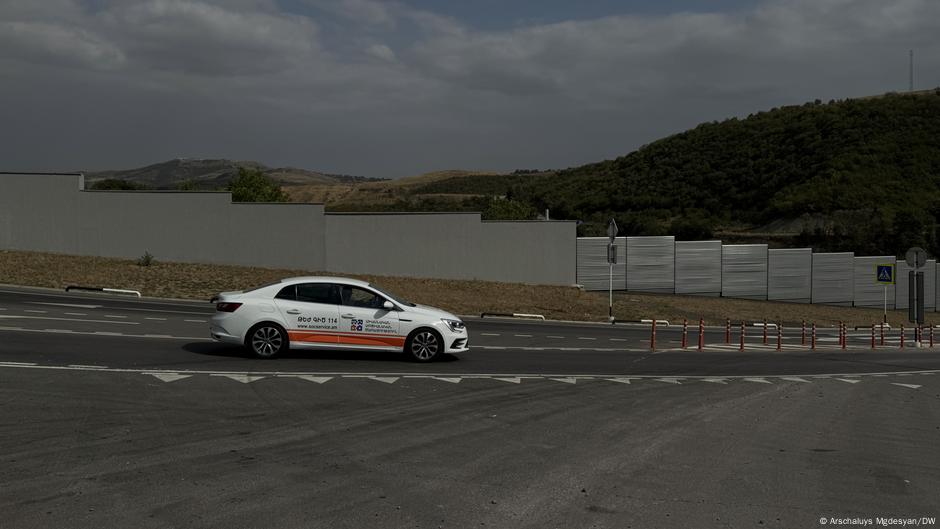
A new concrete border wall has split the Armenian village of Kirants, dividing it into two distinct parts. This 100-meter-long structure, made of three-meter-tall concrete slabs, has stood for over a year, separating homes and lives in a community of approximately 70 houses and 350 residents. The village, located near the border with Azerbaijan, has experienced the impact of conflict for decades.
The Nagorno-Karabakh conflict, which involved both Armenia and Azerbaijan, saw Kirants come under fire despite its distance from the mountainous region at the heart of the dispute. Over the past 35 years, the two countries have engaged in two major wars: one in the early 1990s and another in 2020. In September 2023, Azerbaijan took full control of Nagorno-Karabakh, leading to the displacement of most ethnic Armenians who once lived there.
In 2024, Armenia and Azerbaijan began demarcating their border using Soviet-era maps. As part of this process, 15 hectares of land near Kirants, previously under Armenian control, were officially transferred to Azerbaijan. This change prompted the construction of the border wall through the village, altering the daily lives of its residents.
Life in a Divided Village
The division of Kirants has brought significant changes to the community. Many villagers are struggling to adapt to their new reality. Homeowners whose properties now lie on Azerbaijani territory have received compensation from the Armenian government. However, the economic situation in the village has worsened. Farmers have lost access to some of their land due to the wall, and the number of livestock has nearly halved.
The psychological impact of the wall is also profound. The sight of barbed wire and Azerbaijani flags in the background has left many feeling disheartened. One anonymous villager told Viral In Media, “We have lost our homeland. Not just our property, as the authorities portray it.”
Vladimir Babinyan, who runs the local school, shared similar sentiments. He described the wall as a symbol of a “walled-off” life, but he remains optimistic about the peace it represents. He noted that since the wall was erected, there have been no incidents of gunfire, unlike the 1990s when Kirants was frequently targeted.
Babinyan’s school is directly affected by the new border. Located just a few meters from the wall, the school was planned and approved in 2019 but only completed after the end of the second Nagorno-Karabakh war. When asked what would happen if a student accidentally threw a ball across the border, Babinyan responded with humor: “we simply say, the ball is in their court.”
Tensions and Uncertainty
Despite the current calm, tensions between Armenia and Azerbaijan remain. Armenian authorities claim that tensions have decreased in areas where the border has been fully demarcated. This is evident in the replacement of heavily armed soldiers with border guards who do not wear helmets or bulletproof vests.
However, only 11.7 kilometers of the 1,000-kilometer-long border have been demarcated so far. In early August, Azerbaijani President Ilham Aliyev and Armenian Prime Minister Nikol Pashinyan met in Washington, D.C., in the presence of U.S. President Donald Trump, to discuss a potential peace agreement and accelerate the demarcation process.
Despite the stability in Kirants, doubts persist among the villagers. One resident said, “Yes, everything is calm here now. But can we be sure that it will stay that way in the future?” The fragile peace remains a concern for those living on the front lines of this ongoing conflict.