


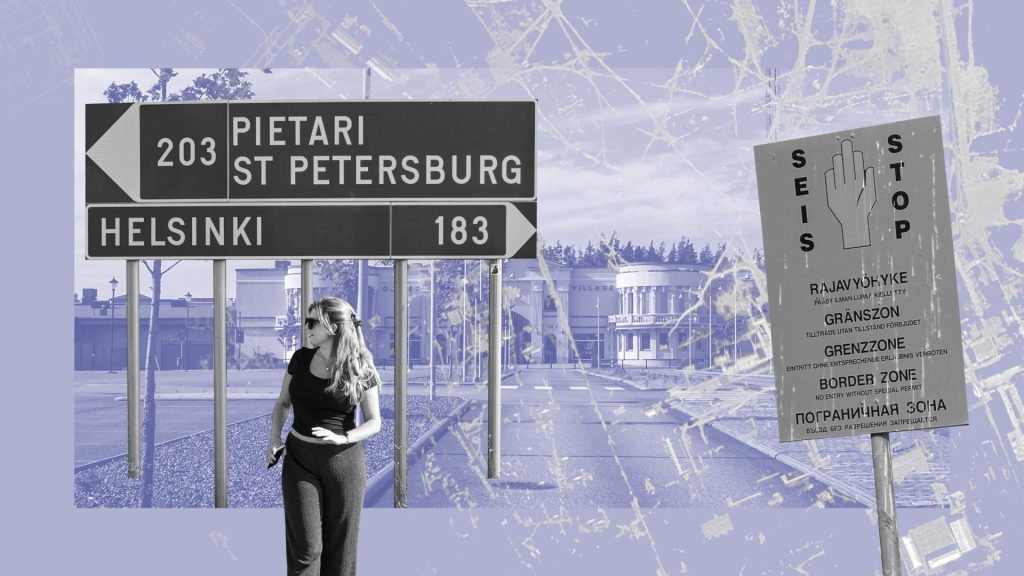
A Quiet Border: The Aftermath of Russian Influence in Finland
The late afternoon sun casts a golden hue over the tall, ornate black iron gates that stand as a symbol of a once-bustling area. Above them, the word ‘Zsar’ glows in bold, golden letters with a crown above it, an unmistakable sign of the high-end shopping center that lies beyond. This luxurious outlet village is situated just a mile away from the Russian border, on Finland’s side. Today, however, the place is eerily deserted.
Once, this area was alive with the energy of Russian tourists who would cross the border to enjoy discounted luxury brands such as Nike and Karl Lagerfeld. Their presence filled the opulent building each weekend, creating a vibrant atmosphere that has now been replaced by the quiet rustle of wind through trees and the distant songs of birds.
Across the road, the Vaalimaa shopping center stands as a reminder of the region’s former vibrancy. Though it operates at a much lower capacity than before, it still offers a wide range of household items, cleaning products, and clothing. The few customers that do come are often accompanied by an eerie sense of emptiness, a stark contrast to its past.
Some shelves still hold remnants of a time when life was different—such as Moomin Christmas ornaments that have remained untouched in green and gold boxes since 2022. These small tokens serve as a poignant reminder of the year that changed everything for this part of Finland.
The Impact of Conflict
Vaalimaa, once one of the largest checkpoints between Russia and Finland, has now become a shadow of its former self. The closure of the eastern border by the Finnish government following the Russian invasion of Ukraine in 2022 marked a significant shift. This move came after the Kremlin sent an influx of ‘refugees’ into the country, prompting heightened security measures.
Joel Linnainmäki, a research fellow at the Finnish Institute of International Affairs, notes that while there has been little activity since the border closed, the government remains cautious about any potential movements from Russia. He mentions that only a few individuals have attempted to cross, but the situation does not seem to be changing soon.
Remnants of Russian Influence
Despite the closure, traces of Russian influence can still be found. Small key chains with Cyrillic inscriptions remain on display in the Vaalimaa shopping center, serving as silent witnesses to a past that is slowly fading. Outside, reminders of the ongoing conflict between Ukraine and Russia are evident. A Ukrainian flag painted on an electricity box near a Teboil petrol station owned by a Russian oil company stands as a stark contrast to the empty gas pumps nearby.
The New Border Fence
Further along the border, a newly erected 10-foot fence topped with barbed wire lines a large portion of the 830-mile-long border with Russia. While this structure is intended for security, Joel explains that it is not designed to withstand an invasion. Unlike the Baltic states, Finland is not fortifying its border in the same way.
In Kurkela, a village where homes are close to Russian territory, the silence is broken only by the swaying of Norway spruces and birch trees. Signs warning of restricted entry and surveillance cameras remind visitors of their proximity to the border. Beyond the fence, Russia’s military presence is becoming more apparent.
Military Activity and Concerns
Recent satellite images have revealed a surge in Russian military activity near the Finnish border. In Kamenka, around 35 miles from Finnish territory, numerous installations capable of housing thousands of troops have been established. This development raises concerns about potential threats to NATO, especially after recent incidents involving Russian drones in Polish airspace prompted Poland’s prime minister to invoke NATO Article 4.
Joel highlights that while Russia is preparing for future capabilities, they currently lack the resources due to the ongoing war in Ukraine. However, the re-establishment of the Leningrad military district suggests a long-term strategy that could pose challenges for Finland and its neighbors.
The Future Uncertain
Although the current border remains quiet, Joel believes that the situation could change in the medium to long term. He emphasizes that Russia’s aggressive policies towards the West are unlikely to change, and NATO must remain vigilant. The future remains uncertain, but for now, the border remains closed, and the once-thriving shopping centers continue to stand empty.