







Understanding the Risks of a War of Chance
Tensions across the Taiwan Strait have raised concerns about the possibility of conflict between Beijing and Taipei. Most analysts focus on two potential scenarios that could lead to war: a “war of choice” or a “war of necessity.” In a war of choice, China might attempt to capture Taiwan by force after carefully weighing the economic, military, and political risks. This would be a calculated move, suggesting that Chinese leaders believe the island can be taken at minimal cost. Alternatively, a war of necessity could occur if Beijing perceives that Taiwan has crossed a political redline, such as declaring formal independence, which would likely trigger a military response regardless of the costs.
However, there is another, less-discussed possibility: a war of chance. This type of conflict could arise from an accident or miscalculation that spirals out of control. The risk of such a war is particularly high in the Taiwan Strait due to the close proximity of both military forces. Domestic political dynamics on both sides make it difficult for either side to back down, and the involvement of the United States adds another layer of complexity. A minor incident could escalate into a full-scale war, with devastating consequences.
Unlike wars of choice or necessity, which can be mitigated through strong deterrence or by preventing Taiwan’s pursuit of de jure independence, the risk of a war of chance cannot be entirely eliminated. However, effective leadership and strategic communication can help manage this risk. China and Taiwan need to maintain open channels of communication to discuss crisis prevention and establish clear off-ramps. The United States and Taiwan must also increase dialogue on how to handle potential crises and preserve U.S. strategic ambiguity, which allows for flexible responses to Chinese aggression. Additionally, China must exercise military restraint and avoid aggressive tactics that could provoke further conflict.
Historical Precedents of Accidental Conflicts
History provides several examples of how accidental events can lead to large-scale conflicts. One notable example is the outbreak of World War I, which was triggered by the assassination of Archduke Franz Ferdinand in 1914. The subsequent actions of the Austro-Hungarian Empire against Serbia led to a chain reaction involving Russia, Germany, and England, ultimately engulfing the world in war within a month.
Similarly, the American Revolution began with a single shot fired by a British soldier in Concord, Massachusetts, against orders. This event, known as the “shot heard ’round the world,” set off a series of actions that led to the war for independence. The Peloponnesian War in ancient Greece also started with a quarrel between factions in Epidamnos, which eventually involved major powers like Athens and Sparta. The Second Opium War in 1856 began when Chinese officials boarded a British vessel and arrested the crew, leading to a series of retaliatory actions that weakened the Qing dynasty.
These historical examples highlight three main factors that increase the likelihood of a war of chance: frequent contact between opposing military forces, internal political dynamics that make de-escalation difficult, and mobilization by allied nations concerned about the credibility of their commitments.
Current Dynamics and Rising Tensions
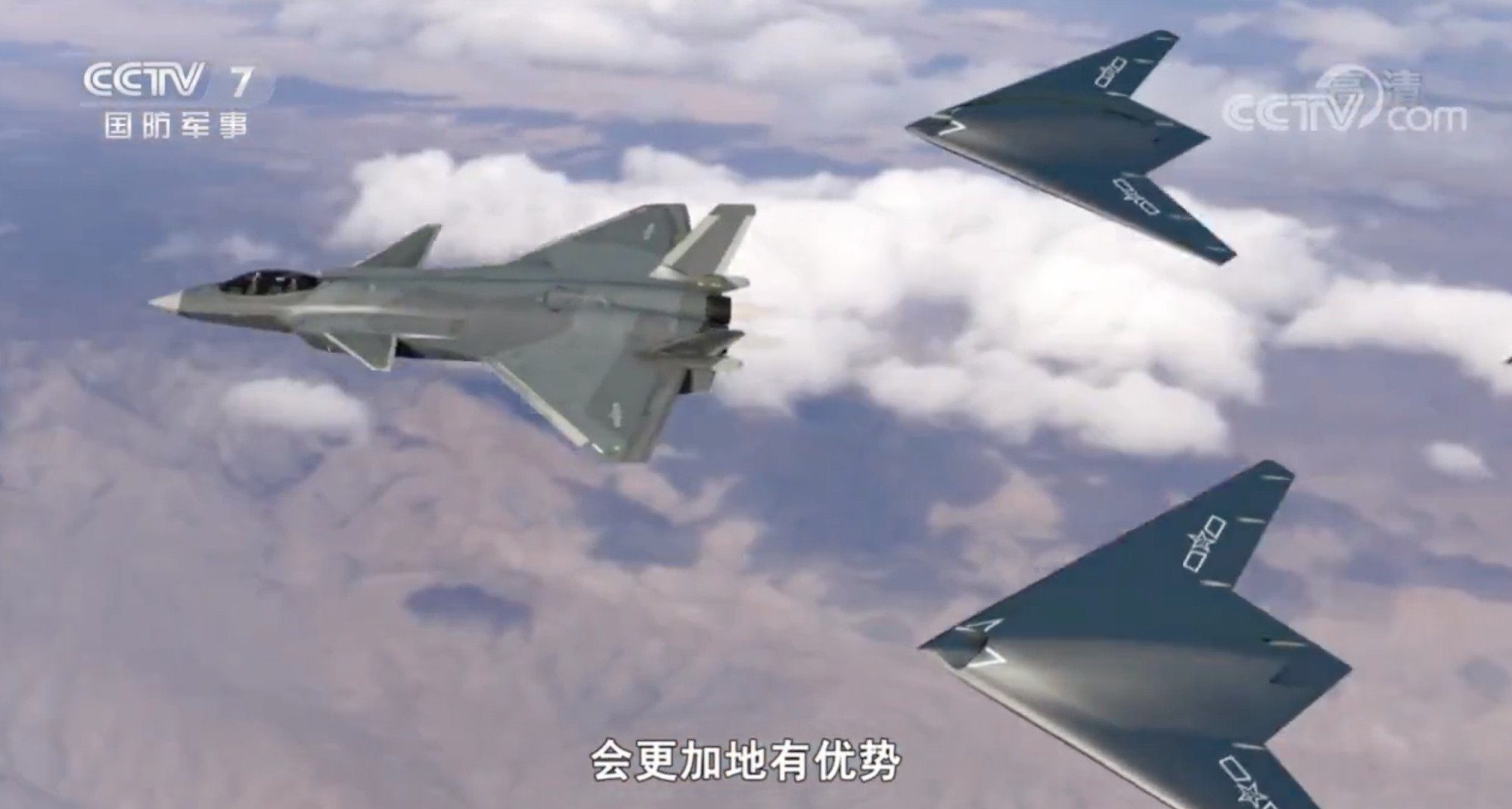
Today, all three of these factors are present in cross-strait relations. Chinese air and naval forces are operating increasingly close to the main island of Taiwan, gradually eroding the informal boundaries between China and Taiwan. In January 2025, Chinese jets crossed the center line of the Taiwan Strait 248 times, compared to 72 times in January 2024. In April 2024, a Chinese fighter came within about 40 miles of the island—a five-minute flight to downtown Taipei. During the Strait Thunder military exercise, Chinese navy ships entered Taiwan’s 24-nautical-mile contiguous zone for the first time. Chinese coast guard ships have also been venturing closer to territory held by Taiwan, and in 2024, they arrested the crew of a Taiwan-flagged vessel near Kinmen, which is part of Taiwan but located just off the coast of China’s Fujian Province.
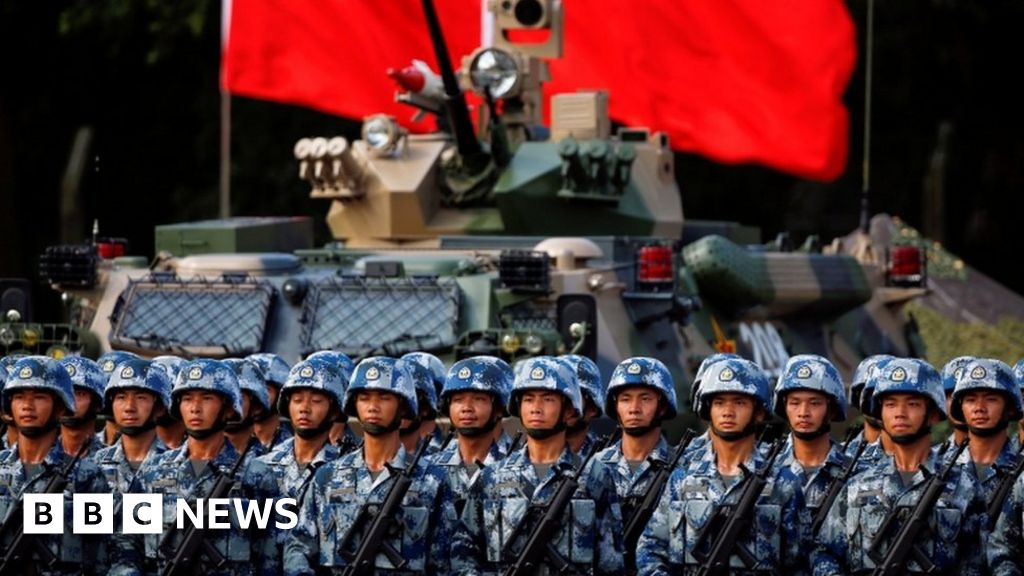
As tensions continue to rise, Chinese forces are likely to exert greater pressure on Taiwan in the years ahead. As Taiwan becomes accustomed to aggressive maneuvers, the PLA may need to take progressively greater risks to achieve its goals. Chinese air force sorties may encroach farther on Taiwan’s territorial airspace, and ships may close in on the island’s territorial seas, increasing the risk of collisions or misperceptions of Chinese intent among Taiwan’s defenders.
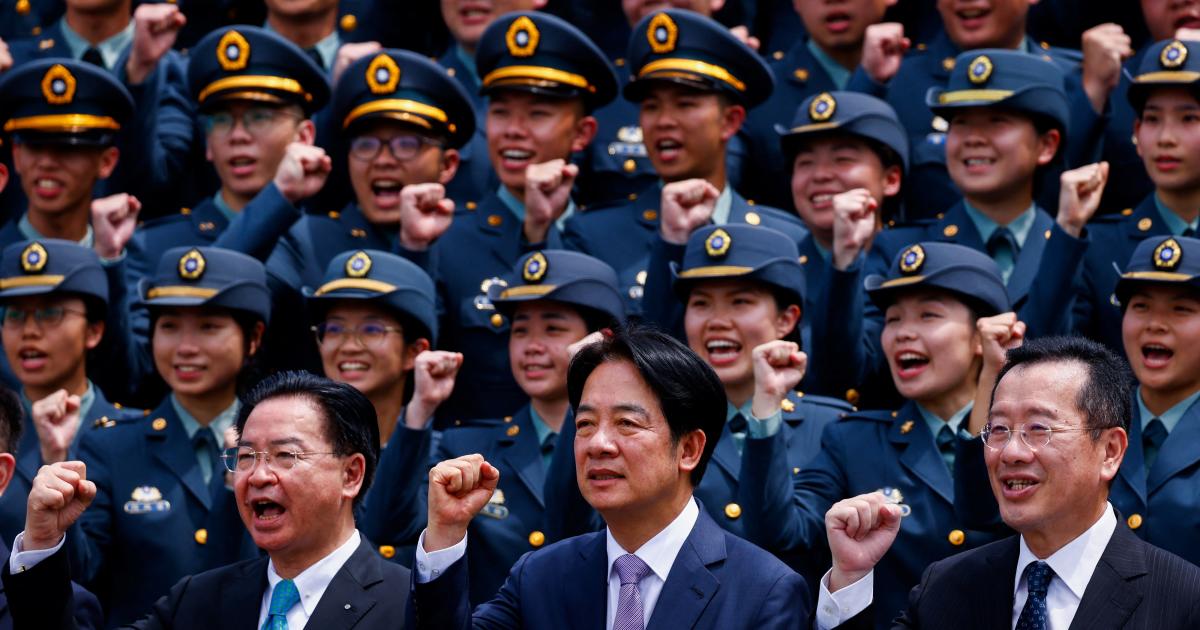
If an accident does occur, finding an off-ramp will be challenging due to political considerations on both sides of the strait. No Chinese leader will want to suffer the embarrassment of backing down against what the Chinese Communist Party has long framed as a rogue secessionist movement. Nor will Beijing want to lose face by withdrawing if the United States or other foreign powers line up to defend Taiwan, as doing so could roil nationalist sentiment among the population.
The Role of the United States and Regional Implications
Although Taiwan has no official military allies, U.S. involvement could significantly expand the crisis. Washington might not be able to distinguish between an accident and a provocation, or it could interpret the events as a pretext for an invasion and begin sending its own forces into the area. Strong bipartisan pressure on the White House to intervene could force the president’s hand. Worried that failure to act would make the administration look weak, embolden China, and undercut the credibility of U.S. commitment among East Asian allies, the U.S. president could order rapid mobilization, which could lead to escalation and even preemptive strikes if Beijing believes it is about to face a U.S. attack.
China’s reckless military actions have created another hazard that is increasing the probability of a war of chance. While Beijing may intend for encroaching flights and ship transits to exert psychological pressure on Taiwan’s government without causing a war, the actions of individual aviators and sailors could unintentionally cross a line. They might veer too close to areas that Taiwan has pledged to defend or accidentally collide with Taiwan-flagged planes or boats. Beijing would then be stuck in an unintentional escalatory spiral from which it cannot escape.
Recent incidents, such as the 2001 collision between a Chinese J-8 fighter and a U.S. EP-3 reconnaissance plane in the South China Sea, illustrate the dangers of such encounters. Although the Chinese pilot’s poor airmanship was responsible for the crash, Beijing could not easily back down due to nationalist outrage. Similar encounters have continued across the region, often driven by the brashness or arrogance of individual PLA pilots or crews.
The most serious clash in recent memory was the brutal melee along the disputed Chinese-Indian border in the Galwan Valley in 2020. Chinese and Indian forces accused each other of precipitating the clash by engaging in what each side saw as aggressive infrastructure-building and troop movements. Twenty Indian soldiers and more than 40 Chinese soldiers were killed.
Fortunately, none of these near misses have triggered a war. Yet, with the uniquely fraught geography, history, and politics of the strait, a similar incident involving Taiwan and China could have far-reaching consequences.