


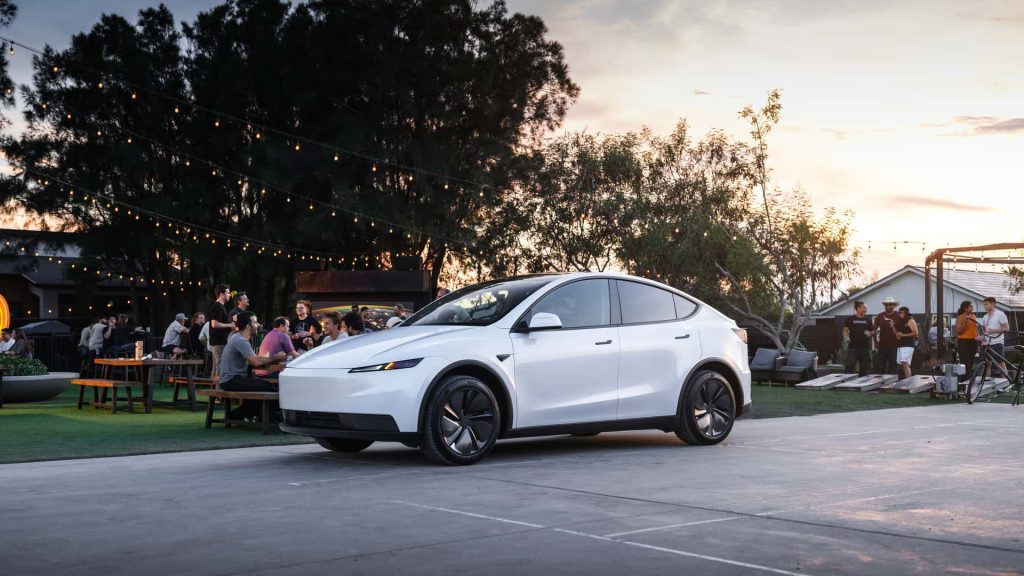
Introduction to the Cheaper Tesla Models
Tesla has introduced two new models, the Model 3 Standard and the Model Y Standard, which are more affordable than the rest of their lineup. These models come with a price cut of at least $5,000, making them accessible for a broader range of customers. However, this affordability comes with some compromises in terms of features and performance.
Key Features Removed from the Model Y Standard
The 2026 Tesla Model Y Standard is priced at $41,630, including destination and order fees, which makes it $5,000 cheaper than the next trim level. One of the most peculiar changes involves the glass roof. Although the car still has a panoramic glass roof, it is completely covered by a single-piece headliner. This change, according to Tesla, saves costs compared to replacing the glass with a solid metal roof.
In addition to the glass roof modification, the Model Y Standard has less power and a shorter driving range of 321 miles, compared to the Premium RWD model’s 357 miles. The base kit includes 18-inch steel wheels instead of aluminum 19-inchers, and the LED lightbars at the front and rear have been removed. The headlights are redesigned to integrate all beams into a single unit, and there’s no adaptive high-beam. The front trunk is smaller, and there’s less plastic cladding under the hood.
The shock absorbers are passive units, while other versions come with frequency-dependent shocks or adaptive suspension. The charging power has also been reduced from 250 kilowatts to 225 kilowatts. Inside, the audio system has fewer speakers—seven instead of 15—and there is no FM radio. The 8-inch rear passenger touchscreen has been removed, none of the seats are ventilated, and only the front seats are heated. The upholstery is a dual-tone design with vegan leather and cloth instead of full vegan leather.
The rear seats are manually-folding, and the rear center armrest has been removed. Cupholders are available for back-seat passengers, but only if you fold the center seat. The side mirrors can be manually folded and don’t have an auto-dimming function. The entry-level crossover doesn’t come with lane centering, even though the car has all the necessary hardware for it. Customers need to pay an extra $8,000 to get Full Self-Driving (Supervised) if they want something resembling Autopilot on the highway.
Features Removed from the Model 3 Standard
The 2026 Tesla Model 3 Standard looks similar on the outside to the more expensive trims. It costs $38,630, including fees, which is $5,500 less than the next trim in the lineup, the Premium Rear-Wheel Drive. Compared to the more expensive version, the bare-bones Model 3 has a shorter driving range—321 miles versus 363 miles—and a lower charging input of 225 kW versus 250 kW.
Like the Model Y Standard, the Model 3 Standard doesn’t get FM radio, an 8-inch rear touchscreen, ventilated seats, Autosteer, and frequency-dependent shocks. However, it retains the panoramic glass roof and you can actually see through it.
Comparison with Competitors
When comparing the Model Y Standard with competitors like the Hyundai Ioniq 5 and Chevrolet Equinox EV, it’s clear that these models undercut the Model Y by thousands of dollars. Additionally, crossovers like the Hyundai Ioniq 5 and Chevrolet Equinox EV have been performing well in the market.
Considerations for Potential Buyers
While the new Tesla Model Y Standard and Model 3 Standard are definitely more affordable than the rest of the lineup, it’s not guaranteed that they offer better value for the money. The entry-level Tesla Cybertruck Rear-Wheel Drive adopted a similar approach of cutting deep into the features list, but it was short-lived as the company discontinued it after just five months.
Potential buyers should consider the trade-offs between affordability and features when deciding whether these models are suitable for their needs. With the increasing competition in the EV market and the absence of tax credits, it remains to be seen how well the Model Y Standard and Model 3 Standard will perform.