


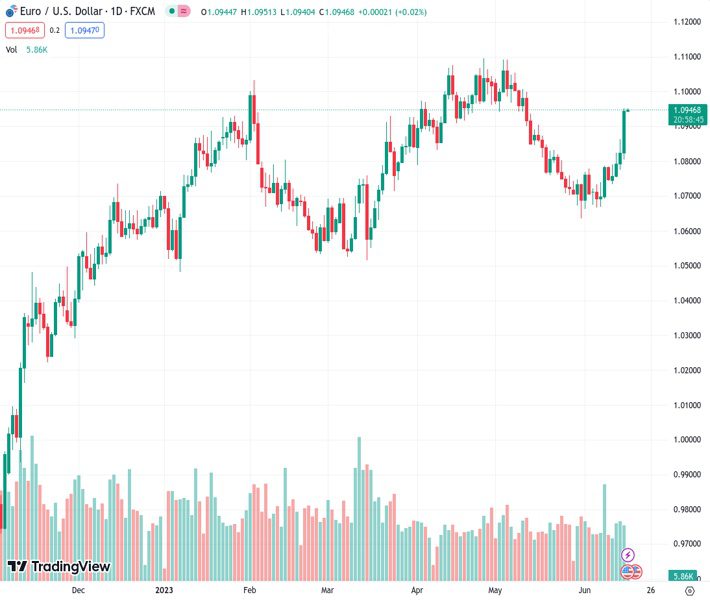
Record Exchange Rate Volatility in 2023
The year 2023 witnessed the most significant intraday exchange rate fluctuations against the U.S. dollar in 16 years, since the aftermath of the 2009 global financial crisis. This marked a period of extreme instability in the foreign exchange market, driven by a combination of macroeconomic and geopolitical factors.
According to data from the Bank of Korea’s Economic Statistics System, the average difference between the daily high and low exchange rates over 242 trading days last year reached 11.6479 Korean won. This represents a 40% increase compared to the previous year’s average of 8.3553 Korean won over 244 trading days. Notably, this level of volatility surpassed even the 2009 figures, when the annual average fluctuation was 14.5652 Korean won over 253 trading days.
Factors Behind the Increased Volatility
One of the primary drivers of the exchange rate swings was the prolonged high-interest-rate policy in the United States. The Federal Reserve’s decision to delay expected rate cuts led to a “strong dollar” phenomenon, where the U.S. currency experienced sharp movements in response to economic data releases. The Dollar Index, which measures the value of the dollar against six major currencies, fell by approximately 9.4–9.5% during the year due to expectations of rate cuts. This marked the largest decline in eight years.
The fluctuations were not just limited to long-term trends but also occurred on a daily basis. The dollar saw sharp swings of tens of Korean won within a single day as market expectations and concerns clashed with each new U.S. economic indicator. These movements created a highly unpredictable environment for traders and investors.
Geopolitical Tensions and Tariff Risks
Geopolitical instability also played a key role in amplifying exchange rate volatility. Concerns over potential U.S. tariffs under the Trump administration led to increased uncertainty in the markets. This resulted in significant daily exchange rate fluctuations, with the Korean won reaching 39.3 Korean won on December 24 and 24.8 Korean won on December 26.
Reuters highlighted that these tariff risks extended beyond trade balances, affecting the Federal Reserve’s ability to cut rates due to inflation fears. As a result, the dollar remained abnormally strong, creating additional pressure on currencies of countries heavily reliant on U.S. exports, such as South Korea.
Bloomberg analyzed the impact of these developments, noting that global fund managers were reducing their Asian asset allocations. The Korean won, in particular, became a target for sell-offs due to its liquidity and exposure to tariff risks. This behavior contributed to the record-high intraday fluctuations observed in 2023.
Impact on the Foreign Exchange Market
The combination of monetary policy uncertainty and geopolitical tensions created a volatile environment for the foreign exchange market. Traders and investors faced challenges in predicting currency movements, leading to increased risk and uncertainty.
The situation underscored the interconnectedness of global markets, where events in one region can have far-reaching effects on others. The Korean won’s performance became a barometer for broader concerns about trade policies and economic stability.
As the year came to an end, the exchange rate volatility served as a reminder of the complex forces shaping the global economy. With ongoing uncertainties, the foreign exchange market is likely to remain a focal point for analysts and policymakers in the coming years.