






The Growing Shortage of Skilled Blue-Collar Workers in the U.S.
A significant number of high-paying, blue-collar jobs are going unfilled across the United States, with experts pointing to a growing reluctance among Americans to pursue manual labor. This issue is particularly evident in industries that once relied heavily on skilled tradespeople, such as automotive manufacturing and repair.
The Automotive Industry’s Struggle
Automotive giants, which historically mobilized large numbers of workers during World War II, are now facing a severe shortage of skilled labor. Ford CEO Jim Farley highlighted this challenge, noting that the company has around 5,000 mechanic positions that can pay up to $120,000 annually—nearly double the national average salary. Despite these attractive wages, filling these roles remains difficult.
Farley emphasized the gravity of the situation, stating, “We are in trouble in our country.” He pointed out that there are over a million open positions in critical jobs, including emergency services, trucking, factory work, plumbing, and electrical trades. “It’s a very serious thing,” he added.
The Challenges of Building a Career in the Trades
One of the primary obstacles is the time it takes to reach higher earnings in the industry. Many mechanics operate under a flat-rate system, where their income depends on how quickly they complete tasks rather than the number of hours worked. As a result, six-figure salaries typically come only after years of experience.


Another challenge is the extensive training required to master the trades. Learning these skills can take five years or more, but for those who persist, the rewards can be substantial. Ted Hummel, a 39-year-old senior master technician in Ohio, earns around $160,000 a year specializing in vehicle transmissions, one of the most complex and physically demanding aspects of modern vehicles.
Hummel, who holds an associate degree in automotive technology, said it took over a decade in the industry to cross the $100,000 threshold. “They always advertised, back then, you could make six figures,” he told the Wall Street Journal (WSJ). “As I was doing it, it was like: ‘This isn’t happening.’ It took a long time.”
The Path to Success
Hummel began working at Klaben Ford Lincoln in August 2012, and it wasn’t until 2022 that his annual earnings exceeded $100,000. Ford’s job center advertises starting salaries of around $42,000 for skilled trade workers, according to listings viewed by the Daily Mail. In southeast Michigan, auto mechanics start at $43,260, with a pay increase after three consecutive months of employment.
The role typically requires eight years of previous experience or apprenticeship, but a college degree is not a prerequisite. Industrial truck mechanics also start at $44,435 under similar conditions.
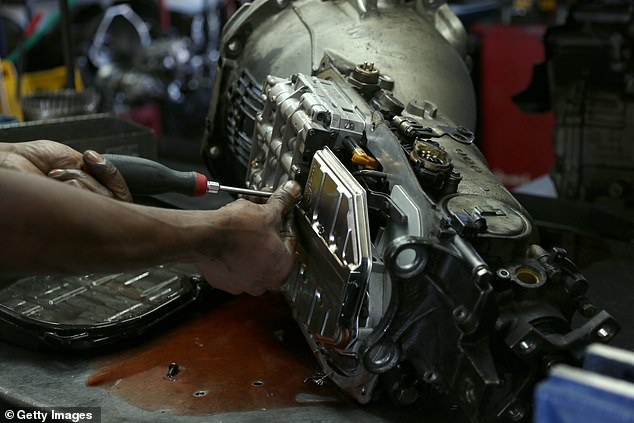
Now at the highest level in his field, Hummel is among a shrinking number of technicians able to repair vehicle transmissions, which give the wheels power and can weigh up to 300 pounds. His skills are in such demand that he is rarely without work. His bosses told the WSJ that they wished they could clone him.
The Physical and Financial Demands
Working on a flat-rate system, Hummel has mastered the ability to complete complex repairs quickly and efficiently. However, this was not always the case. Early in his career, he said it could take up to 20 hours to fix a single transmission, often having to make constant reference to Ford technical manuals to ensure each step was followed correctly.

Beyond the time commitment, the industry can be expensive to enter. Technicians often need to provide their own tools, which can cost thousands of dollars. A specialized torque wrench that Hummel owns costs $800 and is required by Ford.
The work can also take a physical toll. Injuries can sideline mechanics from the bay for months as they heal, significantly impacting their income.
The Future of Blue-Collar Jobs
While white-collar workers have faced widespread layoffs in recent years, blue-collar jobs remain abundant for those willing to train for them. An estimated 345,000 new trade jobs are expected to be created before 2028, according to Forbes.
However, for every five skilled trade workers who retire, only two replacements enter the field, leaving one million positions unfilled. As more Americans pursue college degrees, the manufacturing sector alone could face 2.1 million vacant jobs by 2030, Forbes reported.

