


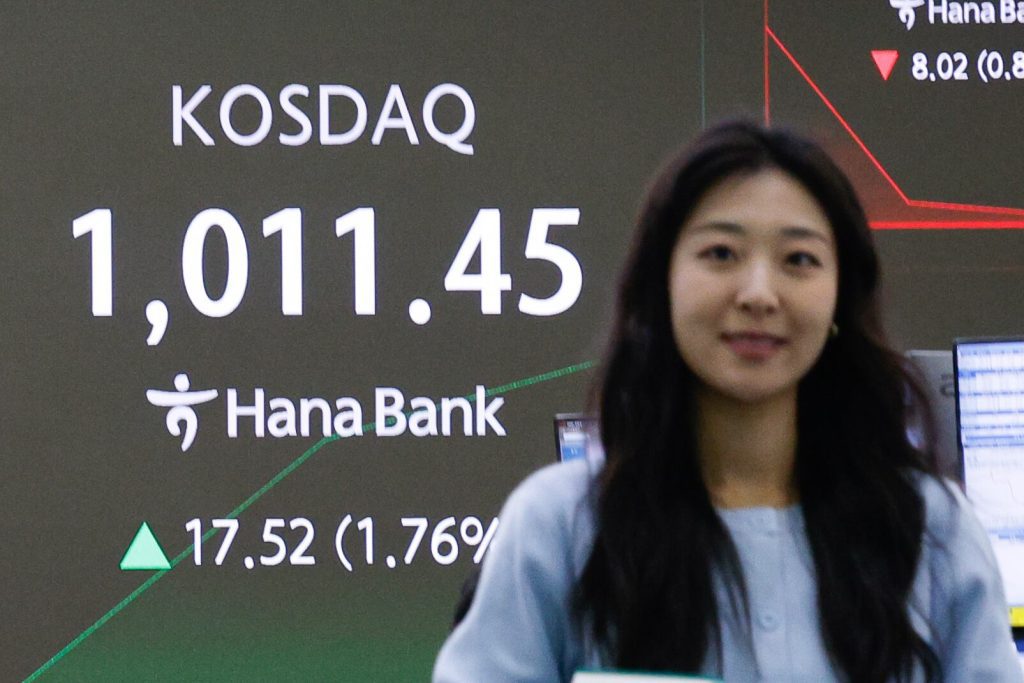
KOSDAQ Surpasses 1,000-Point Mark for the First Time in Four Years
On the morning of the 26th, the KOSDAQ index made a significant milestone by surpassing the 1,000-point threshold, reaching 1,018.47. This is the first time the index has crossed this level since January 6, 2022, when it closed at 1,003.01. The previous high was recorded amid a global tightening trend, marking a gap of four years. The KOSDAQ had previously recovered the 1,000-point level in 2021 for the first time in two decades, erasing memories of the dot-com bubble. However, this recent achievement appears to be driven by the performance of individual companies, along with capital concentration in the KOSPI market and the expansion of the virtual asset market.
As recently as June of last year, shortly after the launch of the Lee Jaemyung government, the KOSDAQ fluctuated around the 750-point level. At that time, its market capitalization stood at approximately 387 trillion Korean won. Over the next seven months, the index surged more than 40%, breaking through the 1,000-point threshold. In terms of market capitalization, the KOSDAQ was only 29 trillion Korean won at the end of 2000, expanding to 98 trillion Korean won by the end of 2010, and reaching 385.6 trillion Korean won by the end of 2020. As of this day, the market capitalization has reached a record high of 560.27 trillion Korean won, entering the 500 trillion Korean won era.
The rise in the KOSDAQ index was largely driven by strong performance in the pharmaceutical and biotech sectors. Since the second half of last year, technology export contracts signed by leading market capitalization companies such as Alteogen and Sam Chun Dang Pharm have been converted into actual royalty income. This led to an average increase of over 60% in operating profits compared to the previous year, which significantly contributed to the overall index rise.
Government Policies and Market Trends Fuel KOSDAQ Recovery
Measures introduced by the Lee Jaemyung government to revitalize the KOSDAQ market also played a role in the index’s growth. President Lee emphasized the need to revitalize the KOSDAQ to ensure fair opportunities for retail investors. In response, the Financial Services Commission announced a revitalization plan on December 20 of last year, focusing on expanding tax benefits and increasing the investment ratio of pension funds in the KOSDAQ market.
The overall bullish trend in the stock market also acted as a positive factor for the KOSDAQ. Capital flowing into the KOSPI’s AI semiconductor boom, led by companies like Samsung Electronics and SK Hynix, created a cyclical investment trend. This trend shifted towards relatively undervalued HBM (high-bandwidth memory) equipment and component companies within the KOSDAQ.
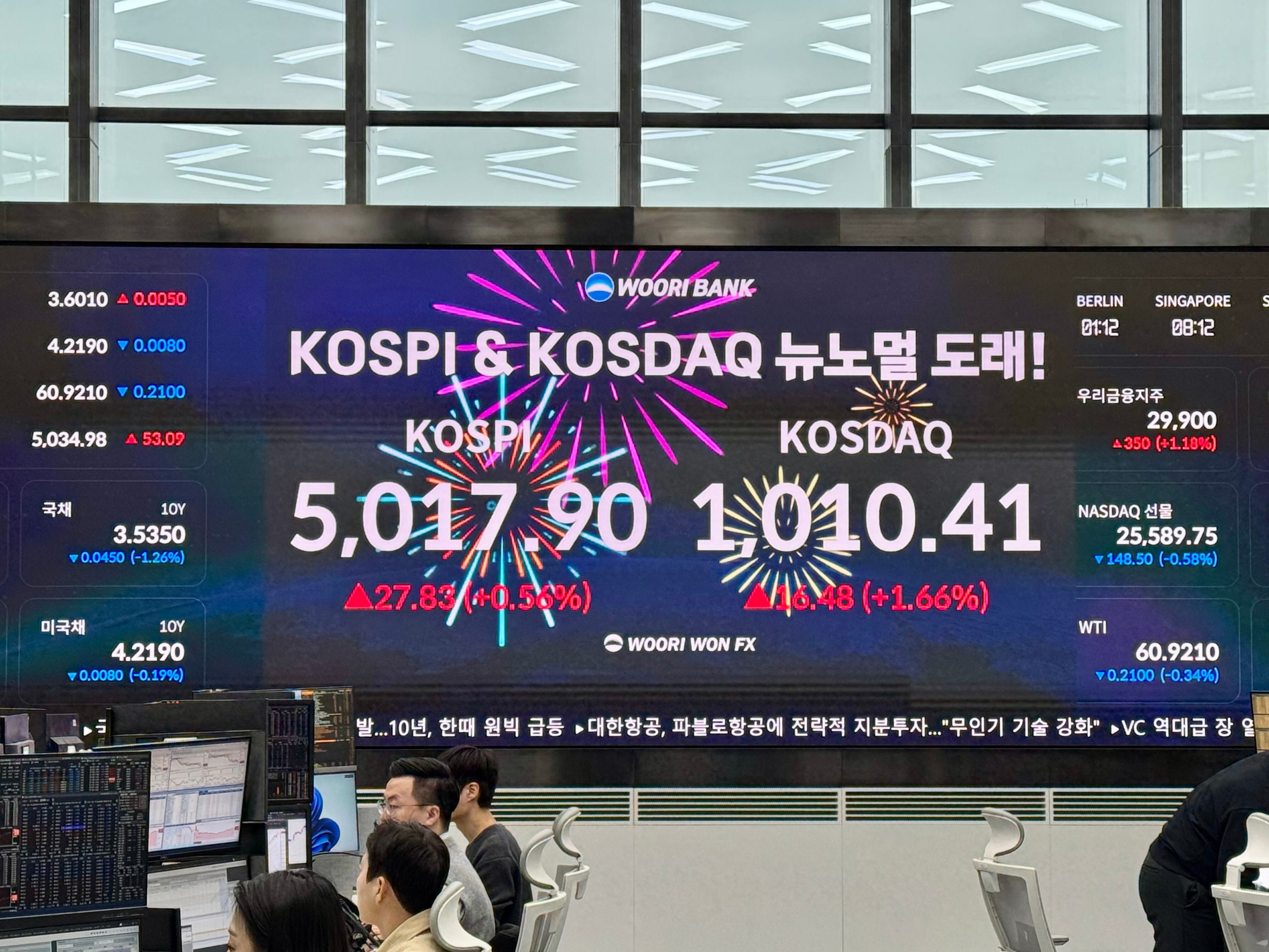

Despite stabilizing above the 1,000-point level, the KOSDAQ remains at only one-third of its all-time high of 2,834.40. A source from the financial investment industry noted, “While the 1,000-point mark in 2021 was a result of relying on liquidity, the 1,000-point mark in 2026 is a product of the government’s policy resolve, abundant waiting capital, and the performance strength of advanced industries combined.” They added, “A full-scale market revaluation centered on stocks that have proven global competitiveness is expected to begin.”
Challenges Remain for the KOSDAQ Market
One of the key challenges facing the KOSDAQ market is the excessively high proportion of individual investors. As of this year, individual investors account for approximately 79% of the KOSDAQ market (by trading volume), which is over 10 percentage points higher than the KOSPI (approximately 67.4%). This imbalance raises concerns about the stability and long-term sustainability of the market.
With continued government support, improved corporate performance, and evolving investor behavior, the KOSDAQ is poised for further growth. However, addressing the dominance of individual investors will be crucial in ensuring a more balanced and resilient market.