


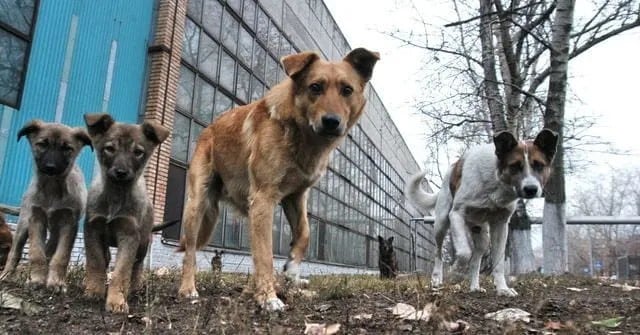
The Impact of War on Canine Physiology
The ongoing conflict in Ukraine has not only affected human lives but also altered the physical characteristics of stray dogs living near the front lines. A recent study reveals that these animals have become smaller and thinner, adapting to the harsh conditions brought about by war.
The research was conducted by Professor Ihor Dykhyi and Researcher Mariya Maruchiu from the Department of Biology at Lviv National Ivan Franko University, along with other collaborators. Their investigation focused on 763 stray dogs across nine regions of Ukraine, spanning from relatively safe areas to high-risk zones. The findings were published in the international academic journal Evolutionary Applications late last year.
Physical Changes in Stray Dogs
The research team worked closely with Ukrainian animal shelters, veterinarians, and volunteers to collect data on the appearance of the dogs. They observed significant differences between those living near the front lines and those in other regions.
One of the most notable changes is the decrease in body mass index (BMI). Dogs near the front lines had an average BMI of approximately 1.5, compared to 2.4 to 2.5 for dogs in other areas. This indicates that the dogs in war zones are significantly thinner.
In addition to weight loss, certain physical traits commonly associated with domesticated dogs—such as short legs, droopy ears, and flat muzzles—have decreased. Instead, features more typical of wild canines, like upright ears, medium-length legs, and balanced muzzles, have become more prevalent. This suggests that the dogs are evolving to better survive in environments filled with explosives and scarcity of food.
The research team explained, “In simpler terms, the dogs’ appearance is increasingly resembling that of wild animals like wolves or coyotes.”
Rapid Adaptations Within a Short Timeframe
The changes observed in the dogs occurred within just 1–2 years, which the researchers describe as an adaptation for survival. Smaller dogs are less likely to trigger landmines and can hide more effectively in confined spaces, giving them a survival advantage.
Moreover, the behavior of these dogs has also changed. While they typically roamed alone, those near the front lines were seen forming groups more frequently. This shift in social behavior is interpreted as a strategy to search for food or protect each other. Groups of two or three dogs were more commonly seen in front-line areas than solitary individuals.
The research team was surprised by how quickly these changes occurred. They noted, “Within just 1–2 years, distinct differences emerged between dogs near the front lines and those in other regions.” This rapid transformation highlights how extreme conditions can lead to drastic changes in an animal’s physical appearance and behavior patterns.
Implications for Wildlife and Domestic Animals
This study offers valuable insights into how animals adapt to extreme environmental pressures. The changes observed in the stray dogs of Ukraine could serve as a model for understanding similar adaptations in other species facing war or climate change.
As the conflict continues, further research will be needed to monitor how these changes affect the long-term survival of these animals. The findings also raise important questions about the resilience of wildlife and the potential for rapid evolutionary responses to human-induced crises.