


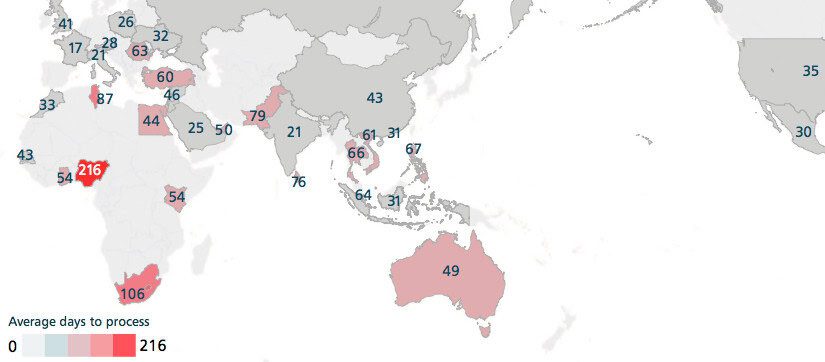
Addressing Trade Challenges for Ghana’s Economic Growth
Ghana is taking steps to improve its trade environment as it aims to expand economic opportunities under the African Continental Free Trade Area (AfCFTA). According to the World Bank, addressing clearance delays, enhancing border management, and improving operational efficiency could significantly boost the country’s competitiveness in the business sector.
The World Bank has highlighted that port clearance delays in Ghana are a major obstacle to trade and private-sector growth. Subika Farazi, a Senior Economist from the World Bank’s Business Ready Unit, pointed out that operational inefficiencies—especially at borders—are a key factor affecting the country’s trade performance.
Clearance times at Ghana’s ports are notably longer compared to some other African countries. For instance, while exports typically take nine days and imports take 23 days in Ghana, similar processes in Cameroon average between five and eight days. This gap highlights the need for urgent improvements in the country’s logistics and customs procedures.
These findings come from the World Bank’s B-READY assessment, which evaluates how well countries implement their business regulations. While Ghana has relatively strong regulatory frameworks, the assessment reveals that the country struggles with the efficient implementation of these rules.
In terms of operational efficiency, Ghana ranks lower than several peer economies, including Togo, Senegal, Cameroon, and Cape Verde. However, the country performs well in the regulatory pillar, ranking highest in this area. In public service delivery, Ghana is second only to Togo among regional peers.
At the sectoral level, Ghana scores strongly in financial services, labor, and business entry. However, it faces challenges in areas directly linked to trade performance, such as market competition.
These insights were shared during a high-level B-READY working session held in Accra. The event brought together senior government officials, private-sector leaders, and World Bank teams to discuss constraints affecting food processing, light manufacturing, and trade facilitation—key components of the government’s 24H⁺ programme.
Key Areas for Improvement
To enhance trade efficiency, Ghana must focus on several critical areas:
- Streamlining Port Operations: Reducing the time required for export and import clearances is essential. This involves improving coordination between customs agencies, simplifying documentation, and investing in technology to speed up processes.
- Enhancing Border Management: Efficient border management is crucial for facilitating cross-border trade. This includes training staff, modernizing infrastructure, and implementing standardized procedures across all border points.
- Improving Operational Efficiency: Strengthening the implementation of existing regulations will help create a more predictable and reliable business environment. This requires better monitoring and evaluation systems to ensure compliance and effectiveness.
- Boosting Market Competition: Encouraging fair competition can drive innovation and improve the quality of goods and services. This may involve revising policies to prevent monopolistic practices and supporting small and medium-sized enterprises (SMEs).
Sector-Specific Challenges
While Ghana excels in certain sectors, there are areas where further development is needed:
- Financial Services: The country has a robust financial sector, with access to banking services and credit facilities. However, more efforts are needed to support entrepreneurs and startups.
- Labour Market: Ghana has a well-developed labor market, but there is a need to address issues such as skills mismatches and employment opportunities for youth.
- Business Entry: Starting a business in Ghana is relatively straightforward, but ongoing support and resources for new ventures are limited.
Conclusion
As Ghana continues to integrate into the AfCFTA, addressing these challenges will be vital for unlocking the full potential of its economy. By focusing on trade facilitation, operational efficiency, and regulatory reforms, the country can create a more competitive and attractive business environment. This will not only benefit local businesses but also position Ghana as a key player in the broader African market.