


The Controversy Around Sunscreen and Skin Cancer
Social media has recently seen a surge in posts claiming that sunscreen causes cancer, despite expert opinions and scientific studies suggesting otherwise. These claims have sparked debates about whether sunscreen protects against melanoma or if it actually increases the risk of skin cancer.
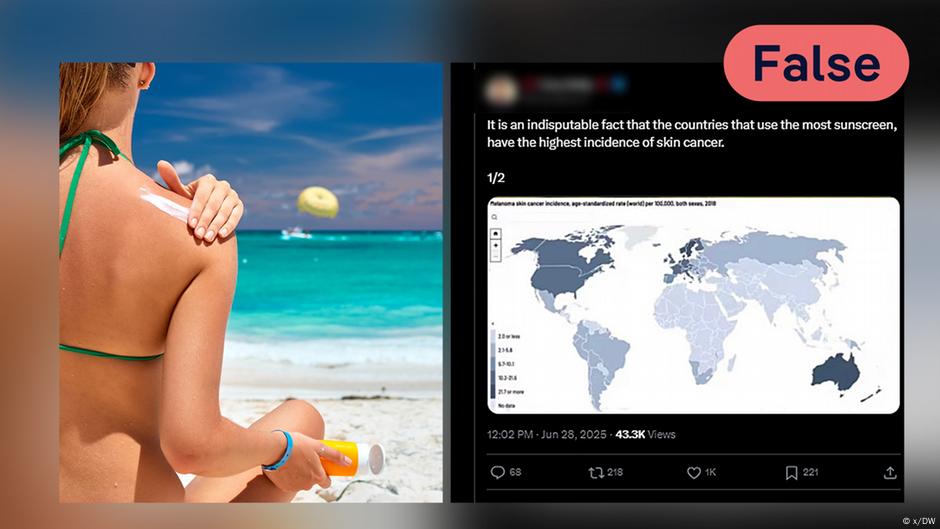
Some social media users argue that countries with high sunscreen usage also have high skin cancer rates. One post on X, which has nearly 60,000 followers, stated, “It is an indisputable fact that the countries that use the most sunscreen have the highest incidence of skin cancer.” Similar warnings appear on platforms like TikTok, where videos caution against the dangers of sunscreen.
However, these claims have been debunked by fact-checking organizations. According to Brittany Schaefer, a Public Information Officer with the Connecticut State Department of Public Health, there is no scientific evidence linking sunscreen use to an increased cancer risk. She clarified that the chart referenced in the X post was not from the Connecticut Tumor Registry (CTR) or the Connecticut Department of Public Health, as claimed.
Rising Skin Cancer Rates: What’s Behind the Trend?
Despite increasing sunscreen use, global skin cancer cases are on the rise. A December 2023 study involving scientists from the US, Switzerland, Germany, and Hungary explored five hypotheses to understand this trend. Possible factors include better diagnostic tools, outdated research, inconsistent sunscreen use, and climate change.
The World Health Organization’s International Agency for Research on Cancer notes that while skin cancer incidence is rising globally, mortality rates have decreased due to improved treatments. Australia leads in skin cancer incidence, with 37 new cases per 100,000 people annually, followed by Denmark, Norway, New Zealand, and Sweden. In terms of total cases, the US had the highest number in 2022, with 101,388 cases, while Germany reported 21,976 cases.
Misconceptions and Outdated Studies
Another factor contributing to the confusion is the lack of up-to-date scientific research. The US Food and Drug Administration only began regulating sunscreen in 2011, meaning earlier studies may not reflect current product standards. Many of these older studies were conducted with less effective sunscreens, leading to misleading conclusions.
Additionally, some people spend more time in the sun than ever before, even when using sunscreen. This could explain the increase in skin cancer rates. However, proper sunscreen application is crucial, and many individuals do not use it as directed.
The Global Sunscreen Market
The sunscreen market is growing rapidly, with global sales projected to reach $13.553 million by 2028. The US, China, and South Korea are the largest markets. However, the question remains: are people in high-risk countries truly using more sunscreen?
In Australia, 38% of adults aged 15 and over used SPF 30 or higher on most days in the last month, but 7% experienced sunburn within a week. Younger people aged 15–24 were more likely to suffer sunburn, highlighting gaps in sunscreen use.
In the US, a poll found that less than half of adults wore sunscreen more than 60 days a year, with 13% not using it at all. Similarly, in Germany, about half of those surveyed said they only used sunscreen during summer or when directly exposed to the sun.
Expert Warnings and Data Gaps
Sybille Kohlstädt, a spokesperson for the German Cancer Research Center (DKFZ), warns that there is no reliable data linking sunscreen use to skin cancer prevalence. While global skin cancer rates are increasing, there are no country-specific statistics that clearly correlate sunscreen usage with cancer rates.
In conclusion, while social media continues to spread misinformation about sunscreen, experts emphasize that it remains a critical tool in protecting against harmful UV radiation. Proper use and awareness are essential in reducing the risk of skin cancer.