








Resumption of Chip Exports to China Offers Relief to AI Sector
The resumption of exports of Nvidia’s H20 processors and Advanced Micro Devices’ (AMD) MI308 chips to China is expected to provide relief to local artificial intelligence companies, according to industry analysts. This development comes amid ongoing efforts by US authorities to balance national security concerns with the needs of global technology markets.
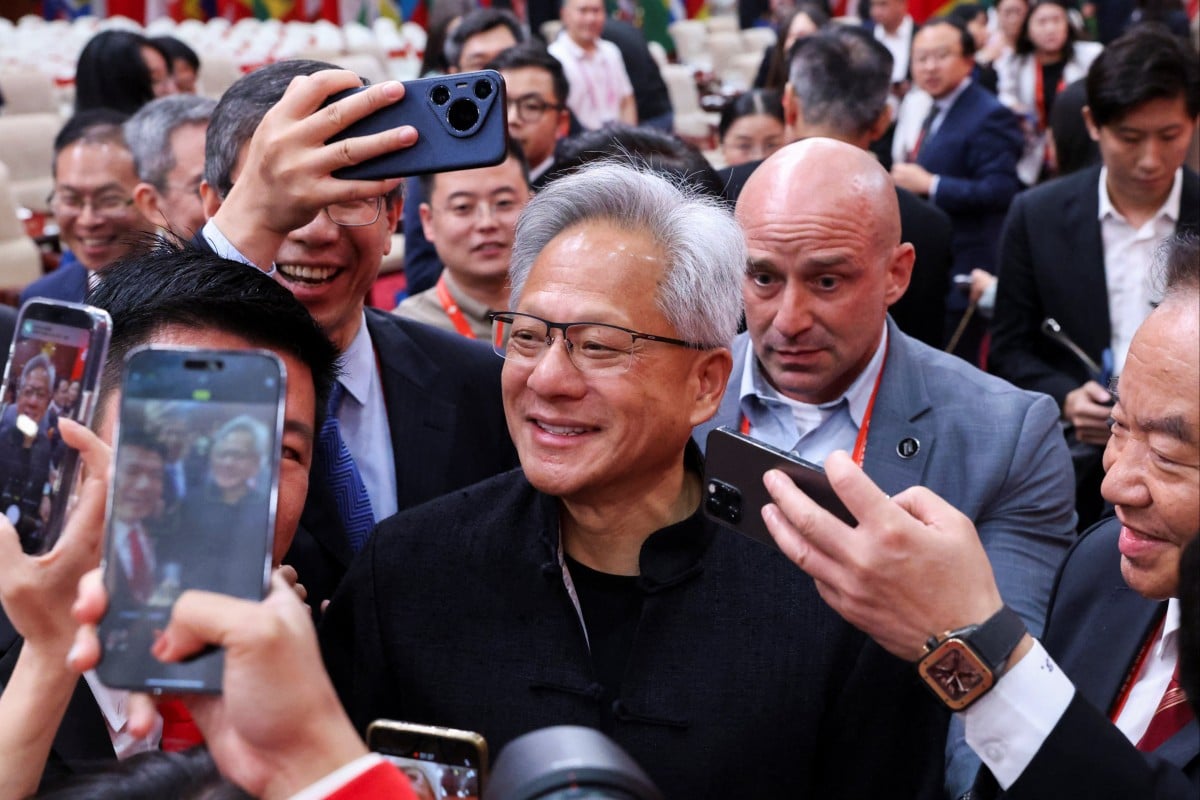
At the China International Supply Chain Expo in Beijing, Nvidia CEO Jensen Huang expressed his hope to introduce more advanced chips to the Chinese market. The H20, designed to comply with US trade restrictions, is less powerful than the H200. However, it is still a critical component for AI inference tasks, which are essential for developing large language models used in advanced AI chatbots.
Under current US regulations, most advanced Nvidia chips, including the A800 and H800, remain restricted from sale to China. This has created a significant gap in the availability of high-performance computing resources for local AI firms. The recent approval of AMD’s MI308 chips and the resumption of H20 exports mark a shift in this dynamic.
Nvidia announced that it would soon resume exports of its H20 chips to China, following assurances from the US government that licenses would be granted. This move aligns with broader efforts to support the global semiconductor supply chain while maintaining strategic controls over sensitive technologies.
During the period when H20 and other advanced Nvidia chips were unavailable in China, Huawei Technologies has been promoting its own alternatives. Huang praised Huawei as “a really incredible technology company” and criticized those who underestimated the company or China’s manufacturing capabilities.
Analysts believe that the return of foreign chip supplies will help alleviate computing-power shortages in the local AI industry. Market intelligence firm TrendForce estimated that foreign chip supply would account for 49% of the Chinese AI market this year, up from a previous projection of 42%. This increase could significantly impact the development of large-scale AI projects in the region.
Sealand Securities analyst Liu Xi noted that the resumption of H20 chip sales could ease the anxiety of domestic AI companies working on large language models. Kaiyuan Securities also highlighted the potential for addressing the lack of semiconductors for local computation.
Before the US export ban, the H20 was in high demand in China. During the first quarter, Tencent Holdings reportedly spent about 2 billion yuan (US$279 million) on computing resources, primarily servers and H20 chips, for its AI initiatives. Following Nvidia’s announcement, Tencent confirmed it was in the process of applying to purchase H20 chips.
While AMD chips have not been as popular in China, the country remains its second-largest market after the US, contributing 24% of its annual revenue. Both Nvidia and AMD faced profit warnings after the US updated its export rules earlier this year, forecasting revenue hits of $5.5 billion and $800 million, respectively.
Morningstar senior equity analyst Brian Colello raised Nvidia’s fair-value estimate to $170 from $140 and AMD’s to $140 from $120. He expressed cautious optimism about the latest restrictions, stating that he assumes the reversal will stay in place going forward.
The resumption of chip exports to China reflects a complex interplay between technological innovation, regulatory frameworks, and global market dynamics. As AI continues to shape the future of technology, the availability of high-performance computing resources will play a crucial role in determining the pace and direction of development in the region.