







Empowering Youth Through AI: A New Era of Innovation in Ghana
Artificial Intelligence (AI) is rapidly transforming the global landscape, and its potential to empower youth in developing nations like Ghana is becoming increasingly evident. Mr. David Johnson, Director of Communications and External Affairs at Newmont Africa, has highlighted the significance of AI as a powerful tool for the younger generation. He emphasized that in a world driven by technological advancements, skills in deep learning, quantum computing, and big data are essential for Ghanaian youth to not only keep up with their global peers but also take a leading role in the technology sector.
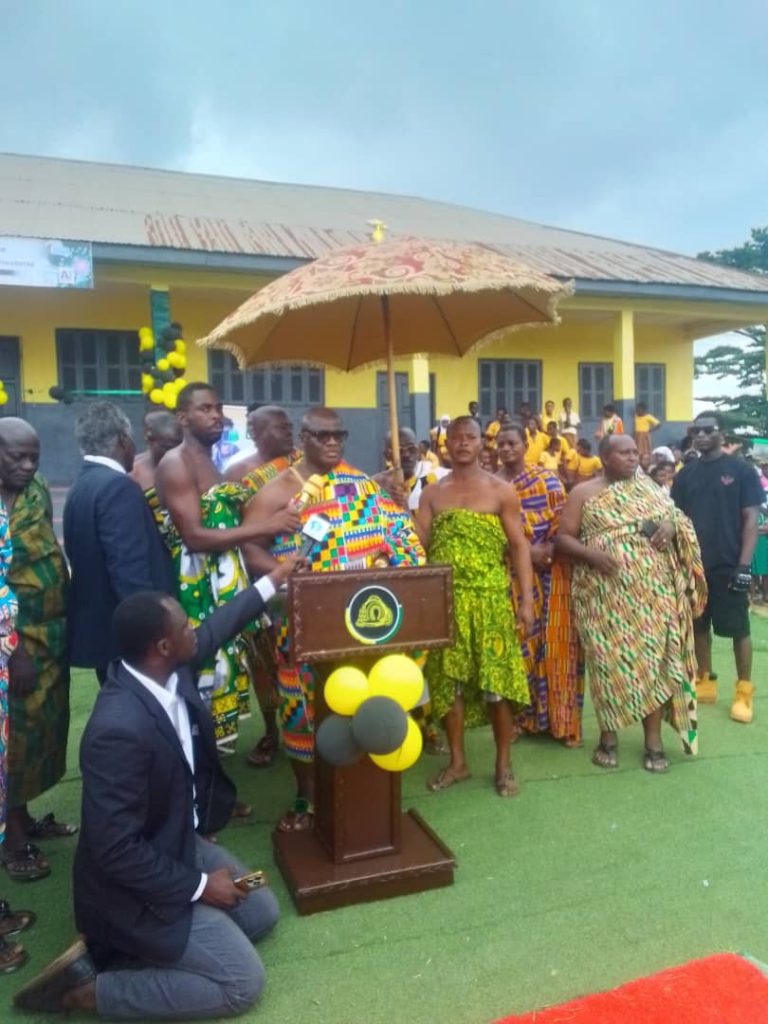
Mr. Johnson made these remarks during the commissioning of an AI laboratory in Toase, located in the Atwima Nwabiagya South Municipality of the Ashanti Region. The facility, funded with GHc 285,000.00, was constructed through a partnership between Newmont Africa, the Otumfuo Osei Tutu II Foundation, and Coral Reef Innovation Africa. This initiative aims to bridge the digital divide and create an inclusive future by providing access to advanced technology in underserved communities.
One of the key challenges faced by rural communities is the lack of infrastructure and proximity to urban centers, which often leads to an underemphasis on Information Technology (IT). However, Mr. Johnson pointed out that these areas are rich in talent, creativity, and ambition. He stressed that initiatives like the AI Smart Laboratory Initiative are crucial in ensuring that these communities have the opportunity to thrive and contribute meaningfully to national development.
Over the past three years, Newmont Africa and its partners have established six AI laboratories across Ghana, valued at a total of GHc 1.7 million. These facilities are not just about providing technology; they are about creating sustainable environments where students can learn, innovate, and grow. The labs are managed with a focus on excellence, ensuring that they serve as long-term assets for education and skill development.
Nana Pokuah Amoako, the Municipal Director of Education, underscored the importance of integrating digital literacy and computer skills into formal education. She noted that with the rapid pace of technological change, it is vital for children to be equipped with the necessary tools to succeed in the modern world. According to a report by the McKinsey Global Institute, up to 800 million workers could be displaced by automation or new technologies by 2030. This highlights the urgency of preparing the next generation for the evolving job market.
The community leaders in Toase have welcomed the initiative, recognizing the transformative impact of technology on communication, education, business, and other sectors. Nana Yim Awere Ababio, the Toasehene, emphasized the importance of individual commitment and patriotism in driving national development. He encouraged teachers to provide the best possible education to students and urged the youth to take their studies seriously, aiming to become productive citizens in the future.
Education, potable water supply, sanitation, and environmental protection are among the key areas of focus for the Toasehene’s vision. By investing in these sectors, he hopes to create a thriving community that contributes to the broader goals of national development.
In conclusion, the establishment of AI laboratories in rural areas represents a significant step toward inclusivity and innovation in Ghana. By equipping young people with the skills needed for the digital age, these initiatives are paving the way for a more prosperous and technologically advanced future.