

EU and China Navigate Complex Ties Amid Trade and Geopolitical Challenges
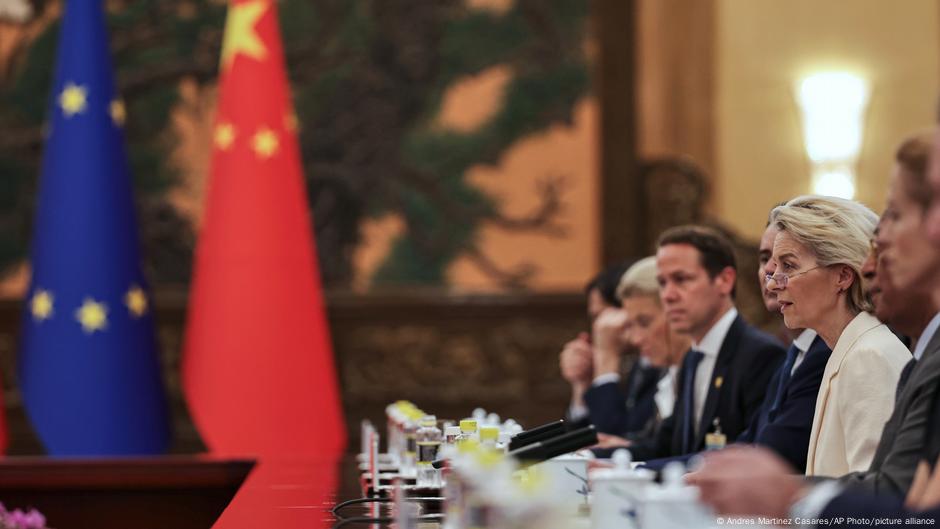
Relations between the European Union (EU) and China have been marked by increasing trade frictions and heightened geopolitical tensions. Despite these challenges, both sides have engaged in diplomatic efforts to address key issues during recent high-level meetings. The EU and China are currently navigating a complex landscape of economic interdependence, strategic competition, and shared global responsibilities.
Upgraded Mechanism for Rare Earth Supply
One of the central topics discussed during the EU-China summit was the supply of rare earth minerals, which are essential for clean technology, semiconductor manufacturing, and medical equipment. The EU has agreed to establish an upgraded mechanism to ensure a stable supply of these critical resources from China. This comes after Beijing imposed restrictions on rare earth exports last year, causing disruptions in European industries.
European Commission President Ursula von der Leyen emphasized that the new mechanism would allow for swift resolution of supply bottlenecks. She noted that China supplies 98% of the EU’s rare earth needs, making it a crucial partner in this sector. However, the issue has also been a point of contention, with the EU seeking greater transparency and reliability in the supply chain.
China’s Role in the Ukraine Conflict
The EU has repeatedly called on China to use its influence over Russia to bring an end to the war in Ukraine. Ursula von der Leyen stated that China’s future actions regarding the conflict will be a determining factor in the evolution of bilateral relations. She urged China to support the EU’s concerns and leverage its relationship with Moscow to facilitate a ceasefire.
European Council President António Costa echoed this sentiment, emphasizing the need for China to scrutinize its exports to Russia to prevent dual-use goods from being used in warfare. The EU has long criticized China for its perceived tacit support of Russia’s invasion, which has helped mitigate the impact of Western sanctions on the Russian economy.
Potential Shifts in Trade Policies
Von der Leyen also hinted at the possibility of the EU reducing its openness to Chinese imports unless there is reciprocal market access. Unlike other major markets, the EU has maintained an open market for Chinese goods, reflecting its commitment to rules-based trade. However, she pointed out that this openness is not matched by China, which has been accused of unfair trade practices.
She highlighted concerns about China’s industrial overcapacity and subsidized production that exceed domestic demand. These issues, she said, could challenge the EU’s current level of openness if not addressed.
Climate Change Cooperation
Both the EU and China have pledged to step up their efforts to combat climate change. A joint statement released during the summit outlined plans for closer cooperation on energy transition, methane emissions management, carbon markets, and green technologies. The two sides also committed to accelerating the deployment of renewable energy and facilitating access to green technology.
China, the world’s largest emitter of CO2, continues to rely heavily on coal despite growing investments in wind energy. The EU, the fourth-largest emitter, is also working to reduce its carbon footprint through various initiatives.
Calls for China to Influence Russia
António Costa reiterated the EU’s call for China to use its influence over Russia to end the war in Ukraine. As a permanent member of the United Nations Security Council, China has been urged to encourage Russia to respect the UN Charter and cease its military aggression against Ukraine.
This plea has often gone unheeded, but the EU remains persistent in its efforts to engage China on this issue. Recent EU sanctions against two Chinese banks, which were linked to Russian interests, have further strained relations.
No Fundamental Conflicts Between EU and China
Chinese President Xi Jinping asserted that no fundamental conflicts of interest exist between China and the EU. He emphasized the importance of strengthening communication, increasing mutual trust, and deepening cooperation amid global instabilities. Xi also called on the EU to remain open to trade and investment while avoiding the use of restrictive economic tools.
He expressed willingness to enhance cooperation in areas such as artificial intelligence and climate change, highlighting the potential for collaboration in addressing shared global challenges.
Rebalancing Trade Relations
Ursula von der Leyen described EU-China ties as reaching an “inflection point” due to growing imbalances. The EU’s trade deficit with China reached a historic high of €306 billion ($360 billion) last year, underscoring the need for a more balanced relationship. She stressed the importance of acknowledging each side’s concerns and finding real solutions to address these imbalances.
Diplomatic Milestone and Shared Interests
The summit marked the 50th anniversary of the establishment of diplomatic relations between the EU and China. Both sides recognized each other as significant trading partners, although they continue to face disagreements over market access, industrial policies, and the Ukraine conflict.
Despite these challenges, state media in China described the relationship as one of “critical partnership,” emphasizing the need for trust and cooperation in an increasingly complex international environment. The summit provided an opportunity for both sides to discuss their shared interests and explore ways to strengthen their relationship.