





Growing Concerns Over Foreign Land Acquisition in the U.S.
A growing coalition of U.S. senators from both major political parties is raising alarms about a troubling trend: an increasing amount of farmland in America’s heartland is being acquired by foreign entities, with China at the forefront. This issue has sparked a debate over national security, economic interests, and the future of American agriculture.
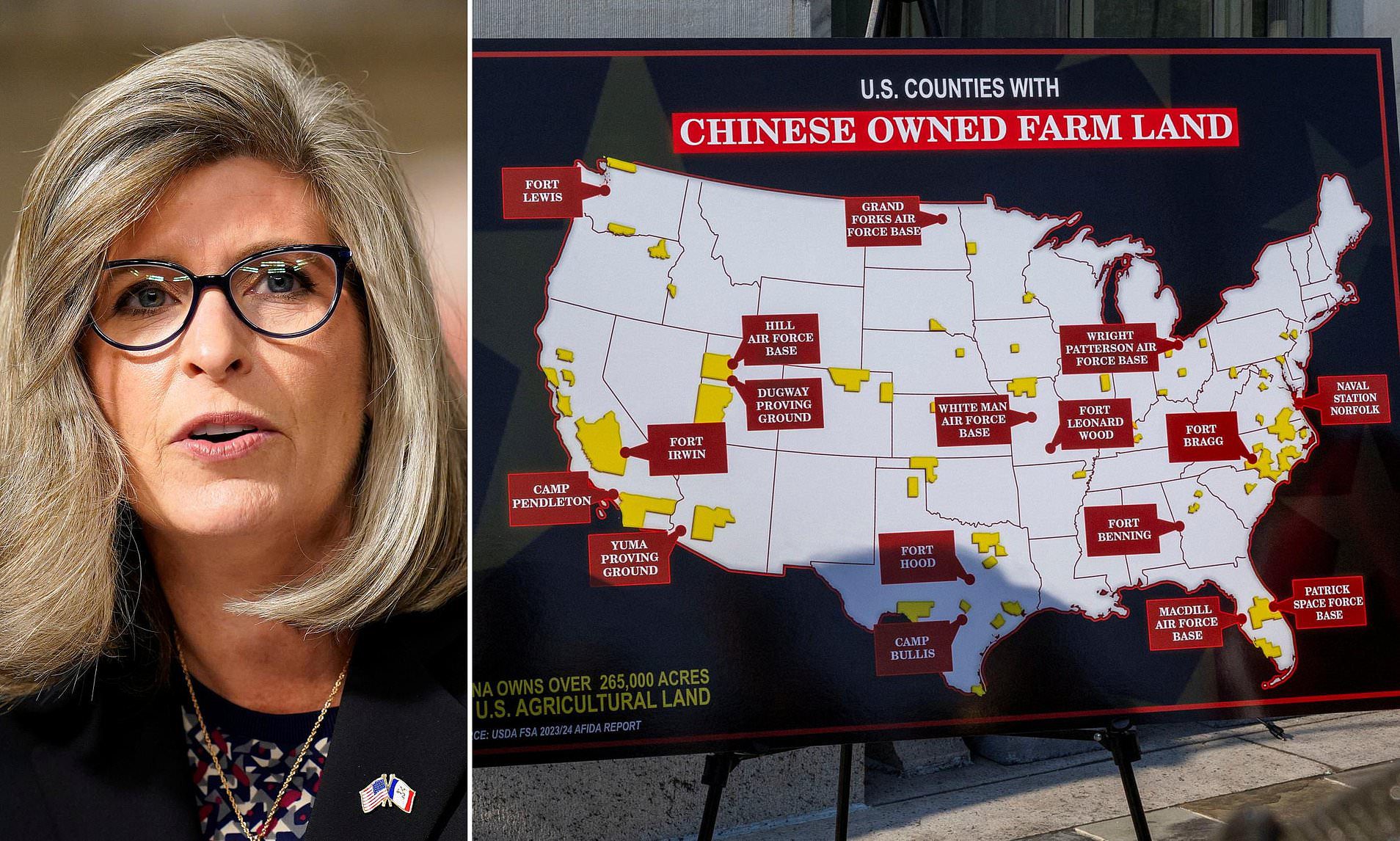
The concern stems from a significant rise in Chinese agricultural investments in the United States. According to Senator Joni Ernst of Iowa, who has introduced the ‘Farmland Act,’ these investments have increased tenfold over the past decade. The legislation aims to address this issue by giving the federal government greater oversight of agricultural properties owned by foreign countries. The primary objective is to limit the influence of adversaries like China on U.S. land, ensuring that critical resources remain under American control.
Ernst has been vocal about the risks associated with foreign ownership of farmland. She emphasized that China’s strategy involves purchasing land to prevent it from being used for U.S. agricultural production, effectively taking control of valuable resources. This concern is not limited to one political party, as both Democrats and Republicans acknowledge China as a threat to U.S. interests in areas such as intellectual property and global competitiveness.
Despite their differences on how to address China’s influence, lawmakers have found common ground on the need for stronger regulations. Ernst managed to secure support from two Democratic senators, Elissa Slotkin of Michigan and John Fetterman of Pennsylvania, as well as Republican senators Rick Scott of Florida and Ted Budd of North Carolina. This bipartisan backing highlights the widespread concern over foreign land acquisitions.
However, the Farmland Act faces opposition from those who worry about increased federal oversight and potential regulatory burdens for foreign investors. Critics argue that legitimate investments could be disrupted or delayed, which might harm the agricultural sector. Nevertheless, many states have already taken steps to restrict foreign purchases of farmland. For example, Iowa, where Ernst is from, has implemented measures to protect its agricultural land.
According to Ernst, the total area of U.S. farmland owned by foreign entities is larger than the state of Tennessee. In North Carolina, China owns nearly 50,000 acres of farmland, some of which are located near sensitive military sites. In Florida, China controls approximately 13,000 acres of farmland. These figures underscore the scale of the issue and the urgency of addressing it.
Other legislative efforts are also underway to counter China’s growing presence in U.S. agriculture. Missouri Senator Josh Hawley has introduced the ‘Protecting Our Farms and Homes from China Act,’ while Representative Mary Miller has proposed a House version of the bill. Twelve Republican members have co-sponsored Miller’s bill, indicating a broader push to address the issue.
The Trump administration previously claimed that China owns over 350,000 acres of farmland across 27 states. Government data estimates that foreign entities and individuals own roughly 43 million acres of U.S. agricultural land, representing nearly 2% of all U.S. land. A 2024 Government Accountability Office report highlighted the challenges in identifying foreign land acquisitions, noting that previous estimates may have been inaccurate.
In response to these concerns, former Agriculture Secretary Brooke Rollins announced that the Department of Agriculture (USDA) would not allow ‘Chinese nationals’ or other foreign adversaries to purchase farmland in the United States. Rollins emphasized that American agriculture is not only about feeding families but also about protecting national security and standing up to foreign adversaries who are acquiring farmland, stealing research, and creating vulnerabilities in critical systems.
As the debate over foreign land ownership continues, the focus remains on balancing national security with the need for open markets and investment. The growing awareness of the risks associated with foreign acquisitions has led to increased scrutiny and legislative action, reflecting a broader effort to safeguard U.S. agricultural resources and ensure long-term food security.