







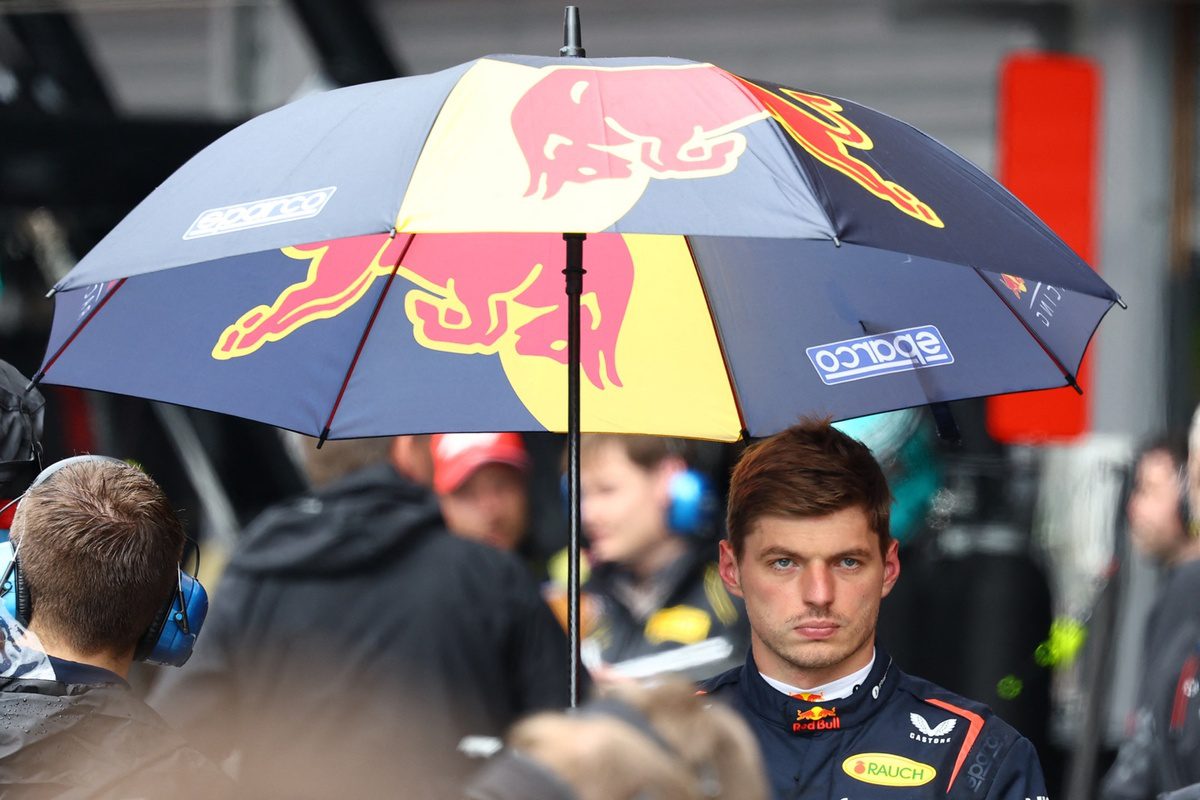
Max Verstappen Criticizes F1 Race Control Decision at Belgian GP
Max Verstappen has expressed strong disapproval of Formula 1 race control’s decision to delay the start of the Belgian Grand Prix due to visibility concerns. The Dutch driver believes that this decision unfairly penalized Red Bull for switching to a wet setup, which ultimately affected their performance during the race.
The race was initially scheduled to begin under heavy rain, with Spa-Francorchamps experiencing a downpour before the start. Due to limited visibility, race control decided to suspend the starting procedure after the formation lap. As further showers continued, the race was postponed until 16:20 local time, 80 minutes after the original start time. Marshals worked to clear standing water from the track during this period.
After completing four more laps behind the safety car, drivers were released for a rolling start in what turned out to be favorable racing conditions. However, the decision to resume the race close to dry weather conditions backfired for Red Bull, as they had made a conscious choice to increase downforce, anticipating a wet race. This meant that both Verstappen and Yuki Tsunoda struggled with a lack of top speed on the straightaways, particularly when trying to overtake cars in front of them.
Verstappen found himself stuck behind Ferrari’s Charles Leclerc for 39 laps, eventually finishing in fourth place. He voiced his frustration, stating that the team had made a strategic choice with the car’s setup, but it proved to be the wrong one when the race resumed in near-dry conditions.
“We made a choice with the set-up and they only allowed us to drive in almost slick conditions, so it was a bit disappointing,” Verstappen said. He also referenced a similar situation during the British GP, where race control released cars too early during heavy rain, leading to an accident involving Isack Hadjar and Andrea Kimi Antonelli.
“Of course, we spoke after Silverstone to be a little bit more cautious with the decisions, but this was at the other extreme for me. It was a choice that we made with the set-up of the car, which was then the wrong one of course, because they didn’t allow us to race in the wet.”
Verstappen emphasized that once the cars switched to slick tires, they were too slow on the straights. Additionally, he mentioned ongoing balance issues with his car, which compounded the problem.
As a wet-weather specialist, Verstappen believed the track was close to being ready at the original start time. He criticized drivers who urged race control to delay the start, arguing that two laps behind the safety car would have significantly improved visibility.
“Between Turn 1 and 5 there was quite a bit of water, but if you do two laps behind the safety car it would have been a lot more clear,” he said. “And the rest of the track was ready to go. The more you run, it will be much better. And if you can’t see, you can always lift. At one point you will see… Then it’s better to say: ‘You know what, let’s wait until it’s completely dry and then we just start on slicks.’ Because this is not really wet weather racing for me.”
Verstappen concluded by expressing his disappointment with the outcome, noting that such classic wet races may no longer happen.
Other Drivers Support Race Control’s Caution
While Verstappen voiced his criticism, several other drivers supported race control’s decision to delay the start. Williams driver Carlos Sainz acknowledged that while the race could have started earlier, the high-speed nature of Spa-Francorchamps and its history made caution essential.
“At Spa-Francorchamps and the history of this track, it’s better to be safe than have an accident and be regretful,” Sainz said. “I don’t think it was a bad call. A safe call, but my respect to the race director because he told us after the accidents in Silverstone that he would play it safer here and that’s what he did.”
Pierre Gasly, who lost his close friend Anthoine Hubert in an F2 crash at Spa six years ago, also supported race control’s decision. Despite the initial poor visibility, Gasly felt that the decision to red flag the race was the right one.
“When we started the first lap we couldn’t see a thing, so that was the right call to put out a red flag,” Gasly said. “Then there was a big cloud coming. Was there a window for five minutes? Potentially, but I think they made the right choice.”
Gasly added that knowing the history of the track, drivers would rather be 10 minutes late than 10 minutes early. “It’s always the same question. Could you restart the race 10 minutes earlier or later? I think at the end of the day, knowing the history of this track and what happens, as a driver you’d rather be 10 minutes too late than 10 minutes too early.”