









The Future of Legacy: AI Avatars That Let You Speak to Loved Ones Decades Later
In a world where technology is constantly reshaping our lives, a groundbreaking innovation has emerged that allows people to preserve their stories and wisdom for future generations. This revolutionary approach enables individuals to “live on” after death, offering a way for loved ones to interact with them as if they were still present.
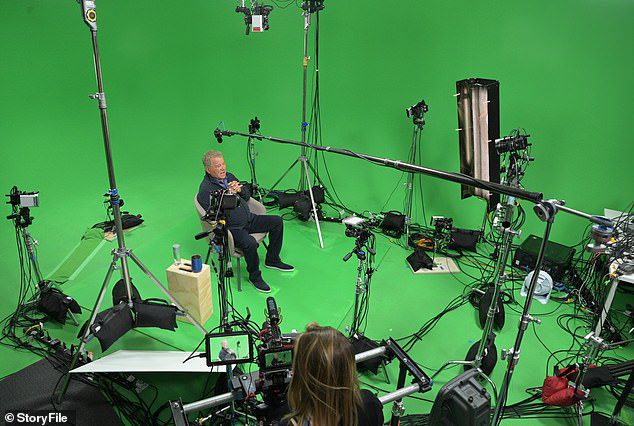
StoryFile, an innovative AI company, has developed lifelike, interactive 3D avatars that can share memories and answer questions in a natural and conversational manner, similar to how a real person would. These avatars are not just static recordings; they are dynamic representations of a person’s personality and experiences, created using advanced generative AI technology.
Individuals such as philanthropist Michael Staenberg, 71, and Star Trek star William Shatner, 94, have embraced this technology to immortalize their lives. Staenberg, a property developer and philanthropist who has given away over $850 million, hopes to pass on his knowledge and the good he has created. He believes it is important to preserve his version of events so that the details are not forgotten, especially since he has led a unique and eventful life.
The technology works by capturing video interviews and transforming them into hologram-style avatars. These avatars use generative AI, similar to ChatGPT, to respond dynamically to questions. StoryFile’s avatars have been used in museums since 2021 to preserve the voices of historical figures like WWII veterans and Holocaust survivors. They have also been used by terminally ill individuals to connect with family after death.
Until now, the service was available only through a premium program costing tens of thousands of dollars. However, a new, affordable app launching this summer will allow everyday people to record their own AI avatars for less than the cost of a monthly cellphone plan. This development makes the technology accessible to a wider audience.
Staenberg envisions a future where business people and family members can continue to interact with him even 30 years from now. He believes that the more people speak to the program, the more realistic and personalized the avatar becomes. The company has already attracted over 2,000 users, and the new app will allow users to interview themselves on video and create an intelligent avatar that can be expanded as they answer more questions about their lives.
Previously, StoryFile avatars could understand the intent of people talking to them but were limited to pre-recorded video answers. Now, the newer AI avatars will be able to generate answers based on the persona from the recorded interviews, approximating responses to any question. This advancement opens up new possibilities for personal legacy and connection.
The company has received numerous daily queries from people diagnosed with terminal illnesses who hope to preserve their legacy in an avatar. StoryFile CEO Alex Quinn shared that they receive heart-wrenching emails every day, including messages from parents who fear their children may not remember them. Quinn acknowledged that the company cannot accommodate all these requests without a more scalable solution.
The answer came in the form of a ‘DIY’ version of the app, allowing users to record their own answers to an AI ‘interviewer’ by answering questions about their career, family, and preferences. The app includes ‘permanent cold storage’ to ensure avatars remain safe once recorded, and users can keep adding new video and information over time.
Quinn admitted that because StoryFile avatars use generative AI, there is a possibility they could initially say “crazy” things. However, he noted that the replica of the person will become more realistic with continued interaction. The experience is almost like an AI FaceTime where you’re interviewed by an AI interviewer, probing deep into specific topics.
Tech pioneers like inventor and futurist Ray Kurzweil have already explored the potential of AI to recreate lost relatives. In 2016, Kurzweil created a “dad bot” based on information about his father, Fred. The “Fredbot” could converse with Kurzweil, revealing insights about his father’s interests and beliefs. Kurzweil described the experience as feeling like talking to his father.
He believed that some form of his dad bot AI would eventually be released to the public, enabling everyone to stay in touch with their deceased relatives. “We’ll be able to actually create something like a large language model that really represents somebody else by having enough information,” he predicted.
As the technology continues to evolve, the concept of preserving one’s legacy through AI avatars is becoming more tangible. With the launch of the new app, more people will have the opportunity to leave behind a digital representation of themselves, ensuring their stories and wisdom live on for future generations.