





A New Approach to Pacific Dialogue
The recent decision by the Solomon Islands to exclude external dialogue partners from the upcoming Pacific Islands Forum (PIF) has sparked significant debate about the future of regional cooperation and the balance between autonomy and international engagement. This move, which aims to create a more focused and inclusive space for Pacific nations, reflects broader tensions in the region as it navigates complex geopolitical dynamics.
The Decision and Its Implications
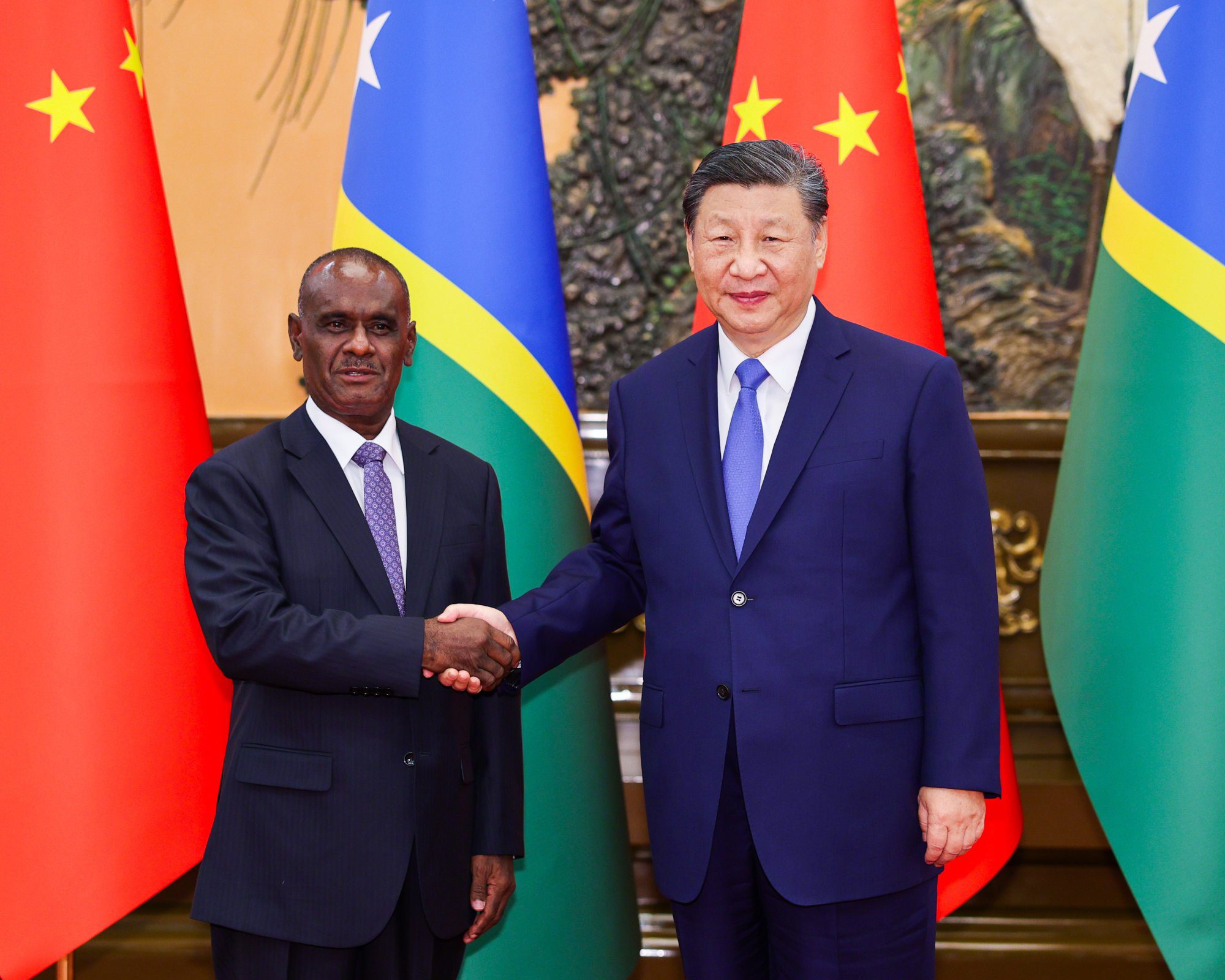
The Solomon Islands, which will host the PIF summit from September 8 to 12, announced that 21 donor nations would not be allowed to participate in the annual meeting. This decision reportedly followed pressure from Beijing to prevent Taiwan’s involvement. The Solomon Islands switched its diplomatic recognition from Taipei to Beijing in 2019, making it one of China’s closest security partners in the Pacific.
This exclusion has raised concerns among Pacific nations that maintain formal ties with Taiwan, including the Marshall Islands, Palau, and Tuvalu. These countries had previously expressed worries that Taiwanese officials might be barred from attending the summit. Beijing considers Taiwan a breakaway province, and while most countries, including the United States, do not formally recognize Taiwan as a sovereign state, many oppose any use of force against the self-governed island.
Red Lines and Geopolitical Tensions
According to Sione Tekiteki, a senior lecturer at Auckland University of Technology’s Law School, the issue of who can attend the PIF is inherently divisive. He noted that if the Solomon Islands had allowed Taiwan’s attendance, Beijing would have reacted “forcefully.” Tekiteki suggested that the decision to bar all dialogue partners was less about solving the issue and more about containing the geopolitics.
“This appears to be a red line for the Solomon Islands,” he said, adding that excluding only Taiwan could have led countries recognizing Taipei to “push back or boycott the meeting altogether.”
Balancing Regional Unity and External Influence
Former Australian diplomat Solstice Middleby, a PhD candidate in Pacific regionalism at the University of Adelaide, called the Honiara decision the “best shot” at preserving unity amid intensifying great-power rivalry in the region. She emphasized that the move allows leaders to focus on each other and the region without external interference.
Middleby highlighted that Pacific unity often involves compromise and respect for diversity, noting that PIF members have long been at odds over how they relate to external powers. She suggested that it may be time to revive informal, leaders-only sessions of the forum’s founding years, designed to protect space for Pacific-to-Pacific dialogue.
Criticisms and Concerns
Moses Sakai, a research fellow at the PNG National Research Institute, argued that the issue lies not with the external or dialogue partners but with the forum itself. He stressed that the forum secretariat needs to fix its system to ensure successful annual meetings hosted by member countries.
The US State Department expressed disappointment over the exclusion of dialogue and development partners, while New Zealand’s Foreign Minister Winston Peters warned that “outsiders” threatened to split the forum. China’s embassy in Wellington rejected these accusations, urging all parties to adhere to the one-China principle.
Taiwan expressed regret over the decision, stating that it was understandable yet regrettable. It noted that there were precedents for such a move, highlighting that dialogue partners’ sessions “add little” and are often “formulaic” and “dominated by scripted statements.”
The Broader Context
The move to exclude dialogue partners was described as a “painful compromise” by Hideyuki Shiozawa, director of the island nations division at the Sasakawa Peace Foundation in Tokyo. He noted that even if Pacific island countries present a united front in international forums, their cohesion may be questioned, diminishing their collective influence.
Shiozawa cautioned that if the trend continued, development partners may lose interest in the region, hindering progress on local issues and shifting towards bilateral engagement instead.
Conclusion
The Solomon Islands’ decision to exclude external dialogue partners from the PIF summit highlights the challenges faced by Pacific nations in balancing regional unity with external influences. As the region continues to navigate complex geopolitical dynamics, the need for inclusive and effective dialogue remains crucial. The outcome of this decision will likely shape the future of the PIF and the broader Pacific region.