









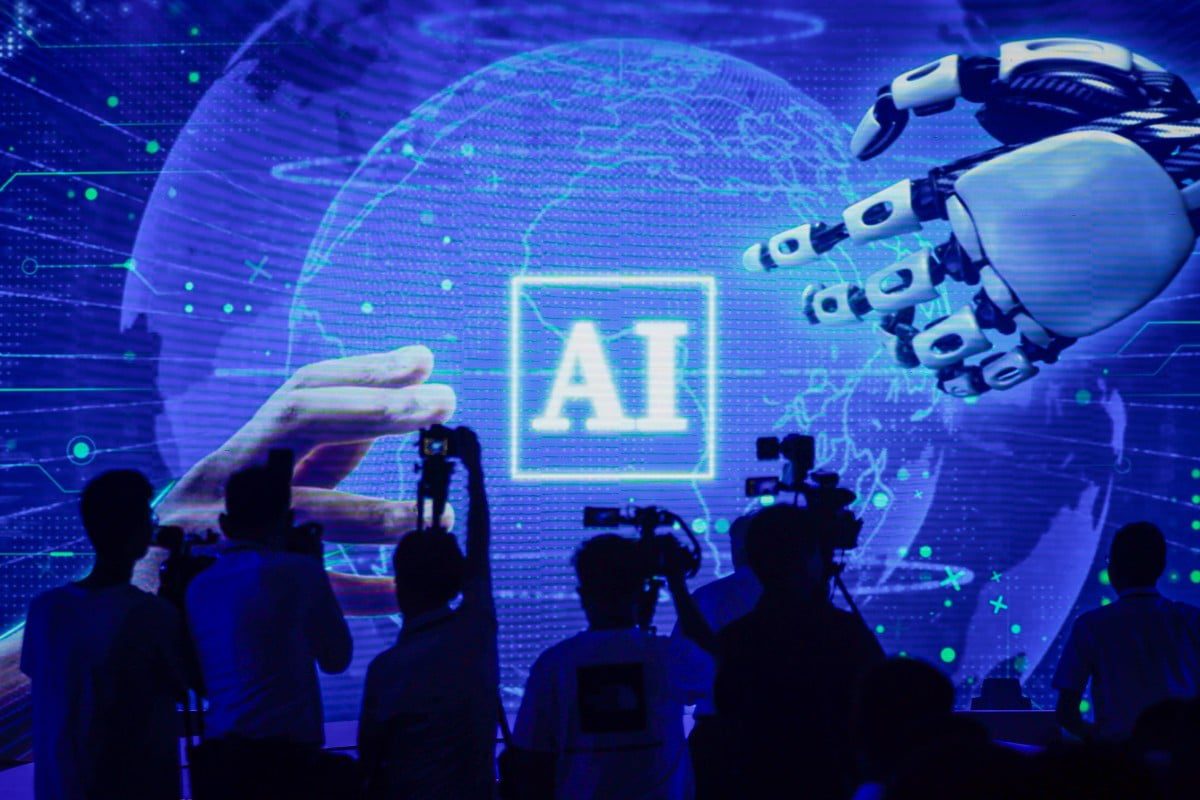
China’s Strategic Push into AI and Computing Power
China is making a significant investment in artificial intelligence (AI) as a key driver of economic growth. With ambitious projections, the country aims to add several trillion yuan to its economy by 2035. This vision is supported by a national initiative focused on enhancing computing power and establishing a unified data market.
At the China Computing Power Conference held in Datong, Shanxi province, officials announced that 10 provinces and municipalities have joined a unified platform. This platform is designed to match business demand with underused computing resources across different regions. The initiative spans from eastern regions like Shanghai and Zhejiang to western areas such as Qinghai and Xinjiang.
According to state broadcaster CCTV, the platform has already attracted more than 100 service providers, 1,000 industry users, and nearly 100 AI models. This collaboration highlights the growing importance of shared computing resources in driving innovation and efficiency.
Expansion of Computing Power and AI Growth
Over the past five years, China has invested heavily in expanding its computing power. An AI-computing-power assessment report published earlier this year by the International Data Corporation and Inspur Information indicates that smart computing power is expected to grow by 43% this year. This growth is part of a broader effort to enhance the country’s technological infrastructure.
The nation has been pouring money into data centers and chips in recent years, driven by a push for self-reliance. Overall computing capacity has expanded by about 30% annually. This investment is crucial for supporting the development of advanced AI applications and ensuring that China remains competitive on the global stage.
Economic Impact of AI
According to Rao Shaoyang, director at the China Telecom Research Institute, AI could contribute more than 11 trillion yuan (US$1.58 trillion) to China’s GDP by 2035. This contribution would account for about 4 to 5% of the country’s output. Additionally, the demand for computing power is expected to increase tenfold or even hundredfold, underscoring the transformative potential of AI.
From 2023 to 2028, China’s smart computing power is projected to grow at a compound annual rate of 46.2%, compared to 18.8% for general-purpose computing power. This disparity highlights the rapid pace of development in specialized computing solutions that support AI advancements.
Global AI Rivalry and Policy Responses
AI has become a critical battleground in the rivalry between China and the United States. Washington has taken steps to limit Beijing’s rising capabilities, including tightening export controls on US chipmaking tools and curbing the global spread of Chinese AI models. These measures reflect concerns over the strategic implications of China’s technological progress.
In response, the White House unveiled its first comprehensive AI strategy since US President Donald Trump’s return to office in January. The strategy includes plans to restrict exports of advanced AI chips to China. However, just days after these announcements, the US allowed Nvidia and AMD to resume exports of some advanced AI chips to China.
This dynamic illustrates the complex interplay between technological competition and international trade policies. As both nations strive to lead in AI, their actions have far-reaching implications for global innovation and economic dynamics.
Innovations in China’s AI Sector
China’s AI sector has seen notable innovations, with home-grown companies challenging global leaders. Earlier this year, DeepSeek AI, a Chinese company, introduced a low-cost, high-performance large language model that rivalled or even surpassed America’s ChatGPT in some respects. This development has prompted a reevaluation of China’s position in the global AI race and highlighted the country’s growing technical capabilities.
As China continues to invest in AI and computing power, the impact on its economy and global standing will be significant. The nation’s strategic focus on technology and innovation positions it as a major player in the evolving landscape of artificial intelligence.