




The New Border and the Divided Lives
Rolls of razor wire now run through the middle of the village known as Chouk Chey in Cambodia, stretching through fields of sugar cane. Just beyond, on the other side of the border, tall black screens rise from the ground, hiding Thai soldiers who erected them. This is the new, hardened border between the two countries, once open and easily crossed by people from both sides.
The change came abruptly at 15:20 local time on 13 August. Huis Malis, a resident, recalls that day vividly. “The Thai soldiers came and asked us to leave,” she said. “Then they rolled out the razor wire. I asked if I could go back to get my cooking pots. They gave me just 20 minutes.”
Huis Malis is one of 13 families cut off from their homes and fields on the other side of the wire, where they claim to have lived and worked for decades. Thai authorities have erected signs warning Cambodians that they are illegally encroaching on Thai territory. In Chouk Chey, residents argue that the border should follow a straight line between two stone boundary markers agreed upon over a century ago.
Thailand maintains it is simply securing its territory, citing ongoing tensions with Cambodia. However, Cambodia sees this differently. Months of tension along the disputed border escalated into open conflict in July, resulting in around 40 deaths. A fragile ceasefire has since held, but nationalist sentiments on social media continue to fuel hostility.
Economic Impact and Human Cost
The Viral In Media visited border areas of Cambodia, meeting people caught in the conflict and witnessing some of the damage left by five days of shelling and bombing. In Chouk Chey, Provincial Governor Oum Reatrey expressed concern about the economic impact of Thailand’s actions. He estimates the community is losing one million dollars a day in customs revenue due to the border closure.
No official figures exist for the total cost of the conflict, but it is clear that billions in annual trade have slowed to a trickle. Hundreds of thousands of Cambodian workers have left Thailand, and Thai tourists have stopped coming the other way. The brand new Chinese-built airport terminal at Siem Reap, gateway to the famed Angkor Wat temple complex, lies deserted.
Residents in Chouk Chey have also been seen pulling down the razor wire in front of Thai soldiers. The governor said they were advised to avoid confrontations, but anger resurfaced in another incident with Thai troops on 4 September.
Disputed Landmarks and Cultural Tensions
In northern Cambodia, the visible costs of the war include the Preah Vihear temple, perched on a forested cliff-top near the border. This historic site is central to the dispute between the two countries, each with its own narrative about its ownership.
Thai nationalists still struggle to accept the 1962 International Court of Justice ruling that recognized the temple as Cambodian territory. However, the court did not resolve other contested border areas, leaving room for today’s conflict. Access to the temple has traditionally been easier from the Thai side, and our vehicle struggled up the steep road built by Cambodians to reach it.
Inside the temple complex, damage from artillery exchanges in late July was evident. Two ancient stone stairways were shattered, while other parts of the temple bore the scars of shellfire. Walls were pockmarked by shrapnel, and dozens of rain-filled craters dotted the ground. Cambodian officials reported over 140 blast sites, attributing them to Thai shelling on 24 and 25 July.
Unexploded cluster munitions, a weapon banned in much of the world, were also found. While the Thai military denies firing at the temple, it accuses Cambodia of placing soldiers and weapons inside during the fighting. No evidence of this was observed, and it seems unlikely that large guns could have reached the site.
Political Rhetoric and Nationalist Sentiments
Both countries use these issues to seek international sympathy. Cambodia has complained to UNESCO about the damage to Preah Vihear and claims 18 soldiers captured after the ceasefire are hostages. Thailand, meanwhile, presents evidence of Cambodian forces laying landmines along the border, injuring many Thai soldiers, which it argues shows bad faith in honoring the ceasefire.
Despite these tensions, Cambodian officials emphasize their desire to end the conflict and restore relations with Thailand. However, a deeper anxiety lingers—one rooted in Cambodia’s history as a smaller country surrounded by more powerful neighbors.
Both sides suffer from the border closure, but Cambodia, being poorer than Thailand, likely bears a heavier burden. Suos Yara, a spokesperson for the ruling Cambodian People’s Party, remarked, “You cannot make an ant go up against an elephant. We have to accept that we are a small country.”
Yet, Thailand accuses Cambodia of instigating the conflict. Research by the Australian Strategic Policy Institute highlights a pattern of military reinforcement along the border months before full-scale fighting erupted in July, primarily by Cambodian forces.
Leaked Conversations and Political Fallout
In June, former Prime Minister Hun Sen leaked a conversation with then-Thai Prime Minister Paetongtarn Shinawatra, in which she appeared to offer him concessions and criticized her own military. This led to her suspension and eventual removal by the Thai Constitutional Court. Thailand views this as the first time a leader of an ASEAN member state intervened to cause a political crisis in a neighboring country.
This leak intensified border tensions, making it harder for any Thai government to adopt a conciliatory stance. It remains unclear why Hun Sen chose to undermine his relationship with the Shinawatra family, but the Cambodian government has been reluctant to address questions about the leak.
Suos Yara argued that the leak was a minor issue compared to the power struggles within the Thai administration. He blamed the Thai military for using the conflict to boost its influence, reiterating Cambodia’s long-standing call for Thailand to accept the disputed French map and the ICJ’s intervention.
The Struggle for Peace
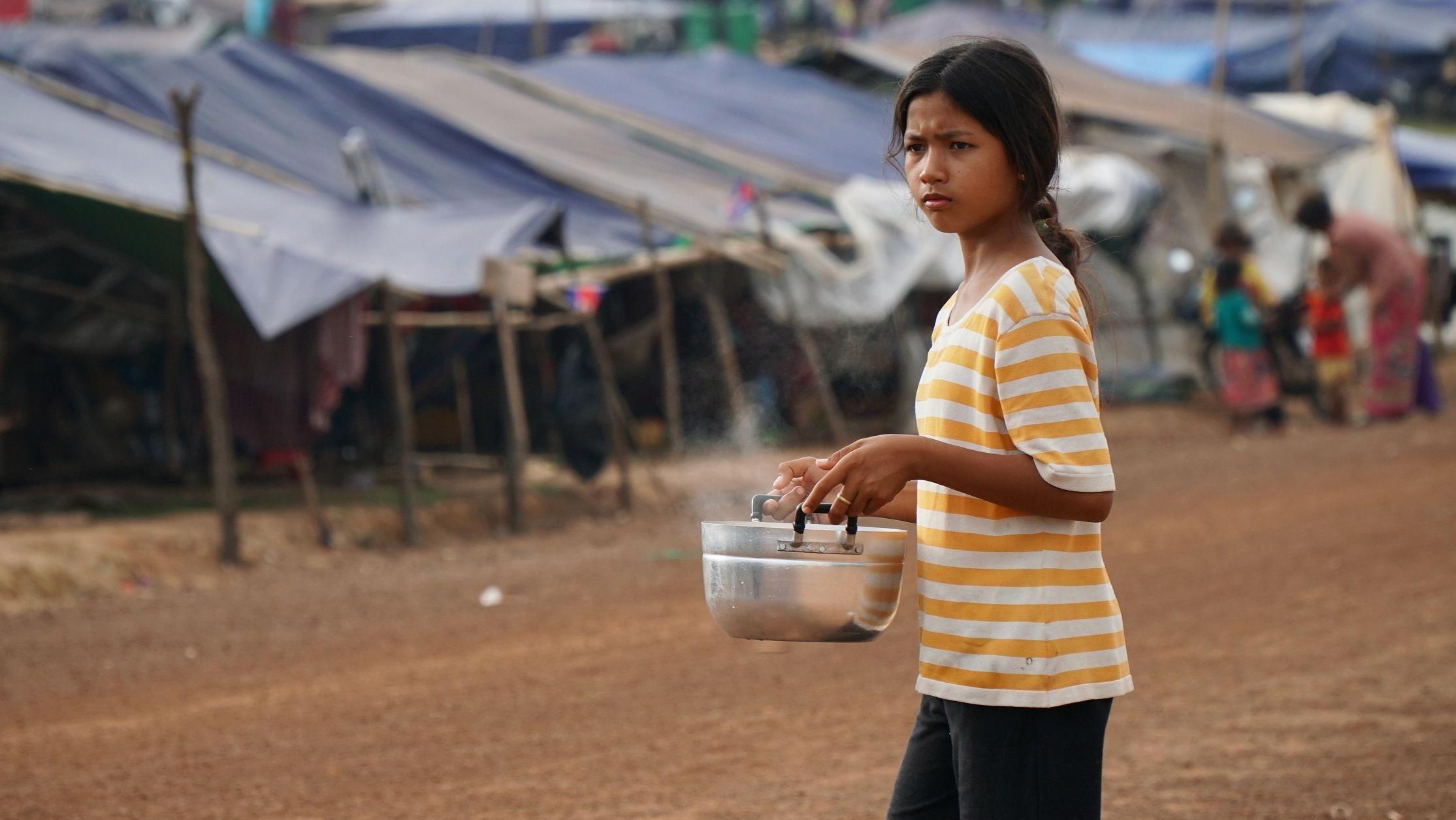
As politicians and officials continue to clash, many Cambodians displaced by the fighting remain in temporary camps, enduring grim conditions. Five thousand families live under rudimentary tarpaulins, surrounded by mud and with minimal sanitation. A communal kitchen serves potato soup for dinner.
On the Thai side, conditions in shelters are better, and displaced individuals returned home within days of the ceasefire. However, in Cambodia, fear persists. A woman in the camp said, “As I live close to the border, I don’t dare go back.” Unexploded ordnance remains a danger, but so does the flood of disinformation about imminent Thai attacks and poison gas, creating a climate of fear that prevents return.
A large sign in the camp reads, “Cambodia needs peace – final.” This sentiment echoes among all those interviewed. For lasting peace, leaders in both countries must tone down the uncompromising nationalist rhetoric that defines their dispute.