









South Korea’s Leadership in AI Data Protection
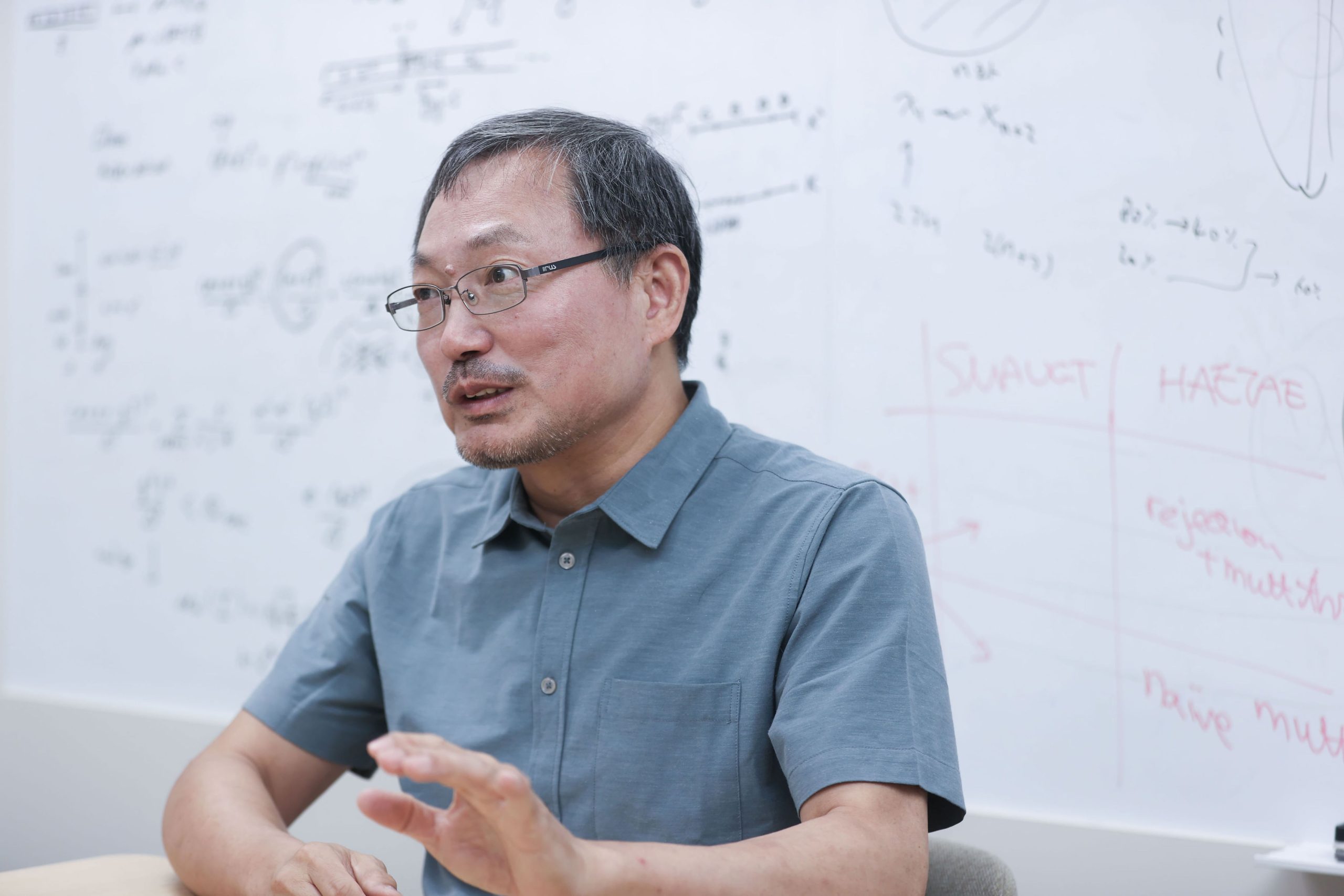
South Korea has the potential to take a leading position in the field of AI data protection, according to Professor Cheon Jeong-hee from the Department of Mathematical Sciences at Seoul National University. During a meeting on the 21st of last month in Gwanak-gu, Seoul, he emphasized that while South Korea may not dominate the global market with AI foundation models, it can become a global leader in AI data protection.
Professor Cheon highlighted that South Korea is currently the world leader in “homomorphic encryption,” a technology that allows various computations on encrypted data without decryption, fundamentally preventing hacking damage. He noted that if Seoul National University, a global leader in this field, commercializes its technology, South Korea could take the initiative in AI data protection.
The Need for Secure Data Handling
Following incidents such as the SK Telecom hacking, which leaked personal information of over 23 million users, and unauthorized small payments at KT—estimated to involve an unprecedented method of “illegal micro-base stations”—hacking-related accidents have become routine, leaving businesses and consumers engulfed in “hacking fear.”
Professor Cheon explained that to search for customer information using encrypted data, one must go through “decryption.” However, businesses often need to decrypt data frequently, making the process inconvenient and leading many to avoid encryption altogether, which is the root cause of many hacks. In contrast, homomorphic encryption ensures that even if hackers steal data, they cannot view its contents because it remains encrypted, fundamentally preventing damage.
Advancements in Homomorphic Encryption
He added that for example, to search for specific keywords in encrypted data, current methods require full decryption. However, homomorphic encryption allows keyword searches without decryption, making it far safer. This is akin to counting money in a safe without opening it.
Professor Cheon began researching homomorphic encryption in 2011 and implemented a 4th-generation algorithm in 2016. The software, named HEaaN (Hyean), won first place at the 2017 International Genomic Data Security Competition in the U.S., defeating Microsoft (MS), the second-place finisher, by 30 times in speed. Since then, his team has maintained its leadership in the field.
Apple, known for its security focus, currently uses 2nd-generation homomorphic encryption. Professor Cheon’s 4.5-generation technology is 100 times faster than Apple’s. He noted that past homomorphic encryption was too slow for commercial use, but now it’s fast enough for industrial applications.
Commercialization and Global Reach
In 2018, with Seoul National University’s support, Professor Cheon founded the startup Cryptolab. He said that the company currently employs 60 in South Korea, 5 in France, and 8 in the U.S. Cryptolab has secured 27.5 billion Korean won in investments and holds 270 patents.
He emphasized that Seoul is the epicenter of homomorphic encryption, adding that students from MIT, UC Berkeley, and Princeton come to their lab to research. Professor Cheon asserted that once homomorphic encryption is commercialized, hacking damage will drastically decrease. If hackers gain nothing, they will disappear on their own.
Expanding Applications and Partnerships
Professor Cheon is already advancing commercialization with domestic and international companies. LG Uplus is reviewing the application of homomorphic encryption for customer data protection within the year, and Kakao Enterprise recently signed a business agreement with Cryptolab for security collaboration. Cryptolab has also contracted with one overseas company.
He stated that AI training data must also be protected, and homomorphic encryption eliminates hacking concerns. He concluded that he is confident that homomorphic encryption will be South Korea’s weapon to secure first place in AI data protection.