



Key Trade Talks Begin in Madrid Amid Ongoing Tensions
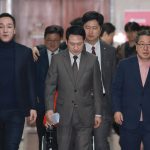
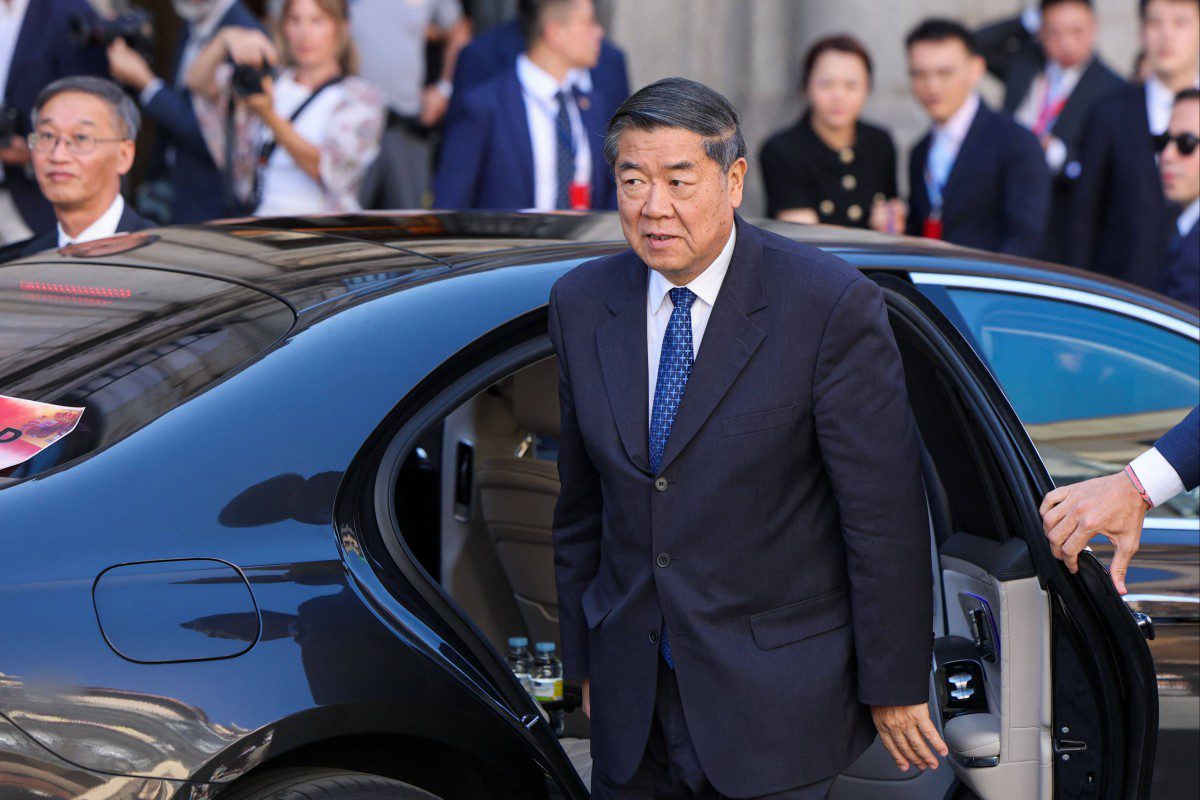
Chinese Vice-Premier He Lifeng and US Treasury Secretary Scott Bessent are leading a new round of trade talks in Madrid, with the tariff truce reached in Stockholm set to expire in November. The delegations arrived at the Spanish foreign ministry in central Madrid on Sunday afternoon local time, just hours after the Chinese team touched down in the capital. A dozen journalists from Chinese and European outlets had gathered outside the ministry building, drawing curious glances from passers-by and locals at nearby cafe terraces.
Spain’s foreign minister, Jose Manuel Albares, welcomed the American and Chinese delegations as they arrived. Vice-Premier He was accompanied by senior Chinese trade negotiator Li Chenggang. Prime Minister Pedro Sánchez is in the south of the country attending a gathering of his Spanish Socialist Workers’ Party.
This is the fourth time He and Bessent are meeting face to face in Europe, as both sides strive to sort out mounting trade disagreements since US President Donald Trump renewed his tariff war in April. On the agenda will be “key national security, economic and trade issues of mutual interest, including TikTok and cooperating on money-laundering networks that threaten both the United States and China,” according to a US Treasury Department statement published on Thursday announcing the meeting.
The Chinese delegation will be in Spain until Wednesday, according to China’s Ministry of Commerce. “The two sides will discuss economic and trade issues such as the US’ unilateral tariff measures, the abuse of export controls, and TikTok,” the ministry said in response to media queries.
On Saturday, Beijing criticised Washington’s decision to add multiple Chinese companies to its export control list two days before the talks and declared investigations into US chips. “At this moment, what is the US intending by imposing sanctions on Chinese companies?” the commerce ministry said in a statement. The statement also announced an anti-dumping investigation into US analogue integrated circuit (IC) imports and began a separate probe into alleged discriminatory practices by Washington towards Chinese semiconductor firms.
Analysts said reaching breakthroughs on major issues such as tariff reductions would be difficult in Madrid, given the continued structural rivalry between the rival powers. “From a Chinese point of view… they believe that, at the end of the day, tariffs will really hurt the US economy, and that time is – so to speak – on their side,” said Miguel Otero, a senior fellow at the Madrid-based Elcano Royal Institute. “It makes it difficult to get to agreements because there is this underlying superiority by both leaders.”
But observers also expect that, on less structural topics such as fentanyl, Chinese-owned TikTok and Chinese foreign direct investment (FDI) in non-sensitive sectors, the world’s two biggest economies might be able to make progress. “There is a part of the US administration that would not mind having Chinese FDI into the US for non-strategic sectors,” said Alicia Garcia-Herrero, chief economist for the Asia-Pacific region at French investment bank Natixis. “This could be on the agenda.”
The deadline for ByteDance, TikTok’s parent company, to sell or divest its US operations to a non-Chinese owner is September 17, after multiple extensions granted by US President Donald Trump. In August, Trump indicated he might extend this deadline again.
A potential meeting between Trump and President Xi Jinping, tipped to take place before or on the sidelines of the Asia-Pacific Economic Cooperation summit in South Korea from October 30 to November 1, could be affected by how the talks in Madrid unfold. Even if there are some breakthroughs in Madrid, both sides are likely to wait until November to make the announcement, according to Otero.
The new round of negotiations is taking place after both sides recently intensified high-level discussions, with their military and diplomatic chiefs speaking by phone. Foreign Minister Wang Yi and his American counterpart, Marco Rubio, had a phone call on Wednesday, with an official Chinese statement describing their chat as “timely, necessary and fruitful.” Both sides emphasised the need to further leverage head-of-state diplomacy to provide strategic guidance for China-US relations, properly manage differences, and explore practical cooperation.
This came a day after China’s Defence Minister Dong Jun held a video call with his US counterpart Pete Hegseth, the newly renamed secretary of war. Dong called for a peaceful relationship between the world’s two most powerful militaries, while warning that “any schemes and interference aimed at ‘using military force to assist independence’ or ‘using the Taiwan issue to contain China’” would be thwarted, according to Chinese state news agency Xinhua. Hegseth also vowed to defend America’s vital interests in the Asia-Pacific region, but he “made clear that the United States does not seek conflict with China, nor is it pursuing regime change or strangulation of the (People’s Republic of China),” according to a Pentagon statement.
After the third round of trade meetings in Stockholm in late July, the two sides agreed to extend their truce for another 90 days. The truce built on earlier negotiations, including those in London in June and a joint statement in Geneva in May where the negotiators announced a 90-day ceasefire. Following the London meetings, China sped up approval for exports of rare earth minerals, while the United States resumed reviewing licence applications for exports of advanced artificial intelligence chips to China.
However, a comprehensive trade deal that would roll back Trump’s tariffs has remained out of reach thus far.