

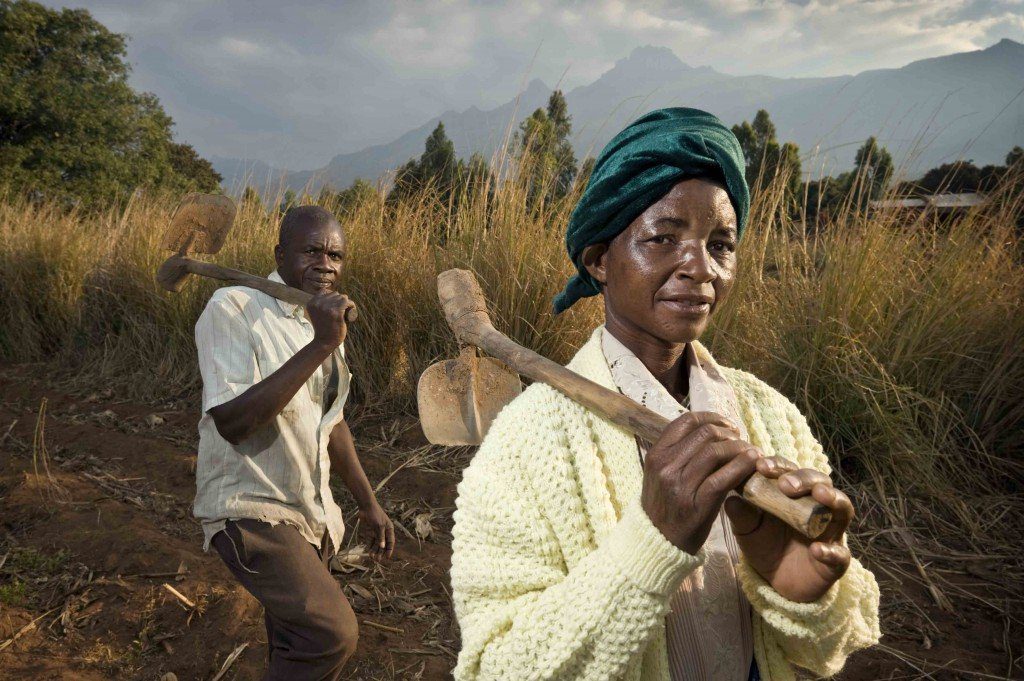
A Democratic Landscape with Economic Challenges
Malawi has a long history of peaceful democratic transitions. Since the introduction of multiparty politics in 1994, power has regularly shifted between different political parties. Citizens and institutions have consistently upheld electoral democratic norms, from respecting term limits to rerunning elections when irregularities occur.
Despite these democratic achievements, Malawi has not seen corresponding economic prosperity or the development of strong economic institutions. The country remains the world’s poorest conflict-free nation. As of 2019, 70% of Malawians lived below the international poverty line of US$2.15 per day. More than half of the population faces multiple, overlapping deprivations.
Since the onset of the COVID-19 pandemic in 2020, Malawi has experienced a series of challenges. These include global food price hikes caused by the war in Ukraine, climate disasters such as cyclones and droughts, and a sudden reduction in development assistance from the United States. In the first three months of 2025, a quarter of the population relied on food aid due to the impact of an El Niño-induced drought on the 2024 harvest.
Against this backdrop, Malawians will head to the polls on Tuesday, 16 September 2025. The election features seasoned political figures, including incumbent President Lazarus Chakwera of the Malawi Congress Party, former president Peter Mutharika of the Democratic Progressive Party, and 15 other candidates. The race is expected to be highly contested, and if no candidate secures over 50% of the vote, a runoff will take place within 60 days of the first round results.
Key Challenges Facing Malawi’s Food Systems
Research into Malawi’s food systems identifies four major forces that hinder progress:
- A severe and protracted macroeconomic crisis
- Volatile and unpredictable agricultural markets
- Reliance on subsistence farming that no longer meets food security needs
- Shrinking farm sizes and too few jobs outside agriculture
These issues require a series of well-sequenced, difficult, and comprehensive reforms. Without action, shortages of essential items will persist, poverty will deepen, and malnutrition will negatively impact future generations.
Steps for the Post-Election Government
The government must recognize that disruptions like those seen in recent years are likely to become more frequent and severe due to intensifying climate change and a more unstable global political order. To manage these challenges effectively, Malawi must accelerate economic growth and build resilient systems capable of absorbing shocks.
Several steps can be taken:
-
Boost Exports
Malawi imports more than three times what it exports, leading to scarcity and high prices for essential items. An overvalued currency makes formal exports uncompetitive. The government should unify exchange rates at a level where supply meets demand, supporting macroeconomic stability while mitigating inflationary pressures. -
Make Agricultural Markets Predictable
The government currently has wide discretionary powers in agriculture, which often leads to uncertainty and discourages investment. A better approach would involve transparent, rule-based mechanisms to encourage market participation and foster a more resilient food system. -
Spend Smarter on Agriculture
Current strategies rely heavily on smallholder farming and maize production, leaving little room for other investments. The post-election government should reassess spending to adopt a more cost-effective approach that supports a broader range of agricultural priorities. -
Invest Beyond Farming
Four out of every five households in Malawi depend on farming, but this is not a viable route out of poverty for most. The average household cultivates just 0.7 hectares of land, insufficient for meaningful income. The government must support a shift away from farming by investing in the rural non-farm economy and fostering job creation in cities and secondary towns.
Achieving Malawi’s Vision
Malawi has outlined a bold vision for its future through the Malawi 2063 plan. This plan aims to transform the country into an upper-middle-income economy by 2063 and aligns with many of the policies suggested in this article. What is needed now is consistent and effective implementation of this plan to ensure sustainable development and improved living standards for all Malawians.