








The Global Impact of a Fictional Scene
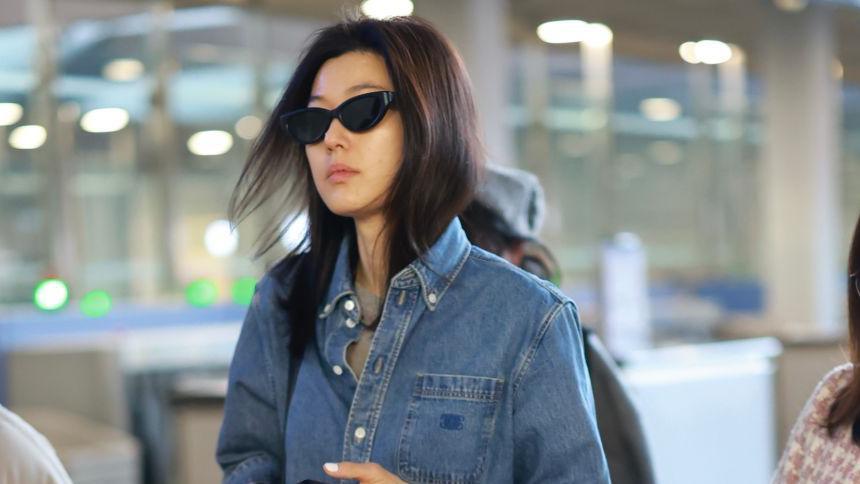
In the spy romance series Tempest, Jun Ji-hyun, one of South Korea’s most renowned stars, plays a diplomat who uncovers the truth behind a deadly assassination. Her character delivers a line that has sparked intense controversy: “Why does China prefer war? A nuclear bomb could fall near the border.” This fictional dialogue has had real-world consequences, as many Chinese social media users interpreted it as an unfair and provocative portrayal of China.
The backlash has been swift and widespread. Chinese netizens have accused the show of misrepresenting China as belligerent, leading to calls for brands to cut ties with Jun Ji-hyun. The incident has also reignited discussions about an unofficial Chinese ban on South Korean entertainment, which has persisted for nearly a decade.
While China has never officially confirmed the ban, the sharp decline in K-content since 2016 is widely seen as a response to South Korea’s decision to deploy a US anti-missile system, which China views as a threat to its regional military interests. In recent months, there were signs of easing tensions, with some South Korean performers holding concerts in China. However, the controversy over Tempest has revived support for the ban.
Social Media Outrage and Cultural Sensitivity
The anger directed at Jun Ji-hyun is not solely based on her line about China. Social media users have also highlighted other scenes from the series that they believe are offensive. For instance, scenes depicting Dalian, a city in China, show dilapidated buildings, which some claim were filmed in Hong Kong and portray China negatively. Another scene features a table set on a red carpet with yellow stars, which many believe resembles the Chinese flag. Additionally, Jun’s recitation of an ancient Chinese poem was criticized for her perceived accent.
This has led to a significant backlash against Jun on Weibo, where users are pressuring brands to take action. Several high-profile companies, including La Mer, Louis Vuitton, and Piaget, have reportedly removed Jun from their social media accounts. One comment on Louis Vuitton’s Weibo page stated, “Besides removing Jun Ji-hyun advertisements, quickly terminate her contracts globally. Otherwise we’ll boycott LV forever.”
Chinese consumers are known for leveraging their purchasing power to express dissatisfaction when they feel national pride is insulted. Brands such as H&M, Uniqlo, and Swatch have previously faced boycotts due to similar controversies.
Defenses and Public Sentiment
Despite the backlash, some individuals have come to Jun Ji-hyun’s defense, arguing that she was not responsible for the controversial line. One Weibo user wrote, “Jun Ji-hyun is just an actor. It is impossible for her to understand the history of a country, the emotions of the people, and the intricate relationships between countries before making a movie.” They blamed the incident on the “ignorance” of the show’s crew and writers.
However, these sentiments have been overshadowed by strong opposition. One comment read, “Even a washing machine can’t whitewash something as well as you,” while another stated, “She isn’t a small-time actor. She has a choice of script, she can read the script! Who can force a popular star to do this?”
Jun rose to fame with the 2001 rom-com My Sassy Girl, which became a hit across Asia and established her as a noughties “it girl.” She continued to gain international recognition with roles in My Love from the Star (2013) and the Netflix thriller Kingdom (2021). However, like many other South Korean celebrities, she has been absent from China’s entertainment scene since the 2016 ban.
Shifting Tensions and Cultural Exchange
There had been optimism earlier this year that the ban might be lifted, as bilateral relations appeared to improve. In March, South Korea’s foreign ministry announced that the two countries’ foreign ministers agreed to work on restoring cultural exchanges. Later that month, the South Korean hip-hop band Homies became the first all-Korean group to perform in mainland China in nearly a decade.
Despite these developments, the future of K-pop and K-dramas in China remains uncertain. In May, the K-pop boy band Epex was scheduled to perform in Fuzhou, but the event was canceled weeks before the date, with the management citing “local circumstances.” When asked about the postponement of another concert featuring multiple K-pop groups in Hainan province, Chinese foreign ministry spokesperson Lin Jian stated that China does not oppose “beneficial cultural exchanges” with South Korea.
Over the past decade, China has emerged as a major force in pop culture, capable of entertaining its 1.3 billion population with homegrown content. For many Chinese viewers, the ongoing controversy surrounding Tempest has reinforced their preference for local media. One Weibo user wrote, “It’s already 2025 and you’re still watching K-dramas, how tacky!”