
The 13th Parliament of Bangladesh Begins Its Journey
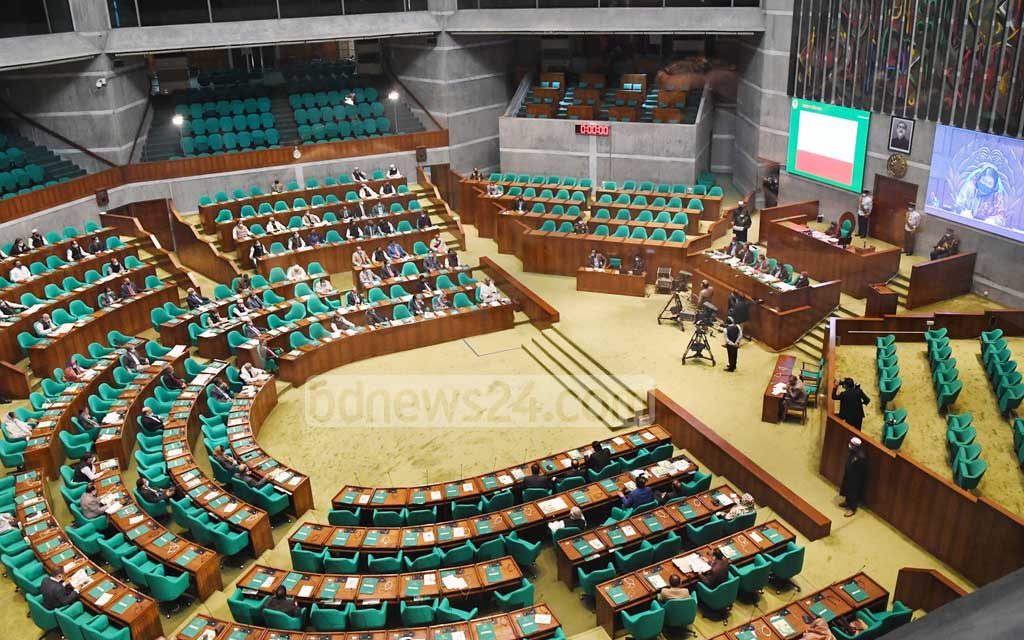
Bangladesh’s 13th Parliament commenced its five-year term on Thursday, March 12, with its first session just one month after the February 12 general election. This marks a significant moment in the country’s political landscape, as the new parliament is set to shape the future of governance and policy-making.
Unlike previous sessions, this first meeting began without a Chair of the Speaker, as both the Speaker and Deputy Speaker are currently unavailable. This absence has necessitated a temporary arrangement for the session’s proceedings.
Key Events of the First Session
The session was initiated by the Leader of the House and Prime Minister Tarique Rahman, who delivered a welcome speech. He then nominated a senior member of parliament to temporarily chair the House before the election of the Speaker and Deputy Speaker by the Members of Parliament.
Following their elections, the session is expected to be adjourned for some time, allowing the newly elected Speaker and Deputy Speaker to take their oaths. President Mohammed Shahabuddin will administer the oath, ensuring the formal transition of leadership within the parliament.
Once the new Speaker or Deputy Speaker assumes the chair, the session will resume. One of the first actions during the session will be the placement of a condolence motion, expressing profound grief over the death of three-time prime minister and BNP chairperson Khaleda Zia, along with former MPs and other notable figures.
President Mohammed Shahabuddin is also scheduled to deliver his speech in the House on Thursday, marking an important step in the parliamentary process.
Preparations and Procedural Details
A meeting of the BNP Parliamentary Party, chaired by Tarique Rahman, was held at the ruling party’s meeting room at Sangsad Bhaban the day before the maiden session of the 13th parliament. Following the meeting, Home Minister Salahuddin Ahmed informed reporters that the Prime Minister will nominate a senior BNP lawmaker to temporarily preside over the House.
He outlined the tentative procedure for the first day of the session, stating that once the Speaker and Deputy Speaker are elected, they will take their oaths. The President will administer the oath as per the rules of procedure of Parliament. Afterward, the House will sit again, and the panel of chairmen for the first session of Parliament will be announced.
A condolence motion will be placed and discussed, followed by the Law Minister placing 133 ordinances seeking endorsement from parliament. Several parliamentary committees, including the business advisory committee, will also be elected.
The President is expected to deliver his speech in the House, and the first meeting of the business advisory committee is likely to be held the following day. The session is expected to be adjourned after another sitting on March 15.
Unique Features and Symbolism
One unique feature of this session is the inscription of the first Kalema in Arabic calligraphy within the session hall of the parliament. This symbolizes the cultural and religious significance of the proceedings.
Chief Whip Nurul Islam Moni emphasized the ruling party’s goal of creating an effective and vibrant parliament where problems are resolved through discussion and debate. He mentioned that a member nominated by the Prime Minister will temporarily preside over the House.
The BNP Parliamentary Party (BPP) authorized the Prime Minister and Leader of the House Tarique Rahman to decide the candidates for the posts of Speaker and Deputy Speaker of the 13th Parliament. The proceedings of Thursday’s sitting will begin with the Speaker’s chair vacant, followed by the recitation of the Holy Quran.
After that, the Leader of the House will propose the name of a senior MP to preside over the sitting temporarily, which will be seconded by another MP. The nominated member will then preside over the session.
Political Context and Significance
The parliamentary elections were held on February 12, with the Bangladesh Nationalist Party (BNP) securing a two-thirds majority. The 13th parliamentary election was conducted in 299 out of the country’s 300 constituencies, with the election to Sherpur-3 constituency postponed following the death of a candidate.
The Election Commission of Bangladesh published the gazette notification on February 13, declaring results for 297 seats. In these constituencies, BNP won 209 parliamentary seats, while Jamaat-e-Islami secured 68, NCP in six, independent candidates in seven, and various other parties in the remaining seats.
Newly elected MPs were sworn in on February 17, with Chief Election Commissioner AMM Nasir Uddin administering the oath. Tarique Rahman, elected from two constituencies, took oath as MP from Dhaka-17, leaving Bogura-6 for a by-election.
According to Article 72(1) of the Constitution, Parliament must be summoned to meet within 30 days after the declaration of the results of polling at any general election. The same article states that unless sooner dissolved by the President, Parliament shall stand dissolved on the expiration of five years from the date of its first meeting. Thus, the five-year tenure of the 13th Parliament officially begins with its first sitting on March 12.
Conclusion
The 13th Parliament of Bangladesh has embarked on its journey with a mix of procedural challenges and symbolic significance. As it moves forward, the focus will be on effective governance, constructive debate, and addressing the nation’s pressing issues. The presence of the first Kalema in Arabic calligraphy adds a unique cultural dimension to the proceedings, reflecting the diverse heritage of the nation. With the President’s speech and the swearing-in of the new Speaker and Deputy Speaker, the session sets the stage for a dynamic and influential legislative period.