
Appointment of Taiwo Oyedele as Minister of State for Finance
The Senate recently confirmed the appointment of Taiwo Oyedele as Minister of State for Finance, after a comprehensive three-hour questioning session by senators from various political parties. The hearing focused on economic and financial issues, with Oyedele presenting several strategies aimed at stabilizing government revenues, improving contractor payments, and expanding Nigeria’s revenue base.
Strategies for Economic Stability
Oyedele outlined a series of measures to address the country’s economic challenges. One of his key proposals was the use of forward sales of crude oil to insulate the economy from price volatility. He explained that this approach could provide predictable fuel pricing for citizens while ensuring stable budget financing.
“One strategy used in several countries is selling crude forward. Nigeria can lock in a price for a portion of our crude for a period of time. That would guarantee budget financing and also give Nigerians stability, so prices are not fluctuating the way we have seen in recent days,” he said.
This method, he argued, would help mitigate the impact of global market fluctuations on the Nigerian economy.
Addressing Contractor Payment Delays
Another critical issue discussed during the hearing was the persistent problem of delayed contractor payments. Oyedele proposed awarding contracts based on available funds to avoid a “trust deficit premium,” where a contract initially costing N1bn could escalate to N2bn due to delayed government payments.
He emphasized the need for transparency and accountability in managing these obligations. Oyedele also highlighted the untapped revenue potential outside oil and taxation, suggesting that Nigeria has been overly focused on these areas at the expense of other revenue-generating sectors.
“For many years as a country, we have disproportionately focused on taxation and oil and gas, and that has taken our attention away from other areas where we can generate revenue,” he stated.
Expanding Revenue Sources
Oyedele pointed to the solid minerals sector as one such area with significant potential. He noted that policy uncertainty remains a major obstacle to its growth. While acknowledging the efforts of the Ministry of Solid Minerals, he stressed the need for a more stable and predictable policy environment.
“We may be coming to the National Assembly in this regard,” he added, indicating that legislative support would be necessary to unlock the sector’s potential.
Realistic Budgeting and Execution
Oyedele also emphasized the importance of realistic budgeting and the full execution of approved projects. He called for ensuring that there is sufficient funding behind each budget and that releases are made promptly to execute projects effectively, particularly for capital expenditure.
“Looking at Nigeria’s budgets over the past five years, many appeared too ambitious compared to the revenue. We were focusing on expenditure without paying enough attention to the revenue side,” he said.
He further noted that nearly half of Nigeria’s budgets are currently deficit-financed, highlighting the need for more attention to realistic revenue generation to drive development.
Immediate Priorities
If confirmed, Oyedele outlined his immediate priorities, starting with a clear status quo analysis. He proposed identifying how much the government owes contractors, how much it has, and how to bridge the gap.
“If I am confirmed by this distinguished Senate, one of the first things I will do is create a clear status quo analysis. If we owe contractors, we should know it. We should say: as of today, this is how much we owe contractors, this is how much we have, this is the gap, and this is how we plan to raise the money,” he said.
Government Spending and Inflation
On government spending and inflation, Oyedele acknowledged that increased revenue from removed subsidies is essentially a transfer from the people to the government. He emphasized that this sacrifice must be worthwhile if the money is spent on priority areas for the people.
He also expressed confidence in targeted investments in infrastructure, such as linking farms to markets. Such investments, he argued, could generate rapid economic benefits.
“Those priorities can be as basic as roads from the farm to the warehouse, to the factory, and to the markets. When that happens, people see the impact almost immediately,” he said.
Senate Confirmation and Reactions
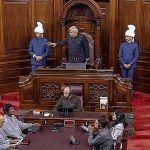
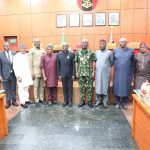
Following the nearly three-hour screening, the Senate confirmed Oyedele’s appointment as Minister of State for Finance. Senate President Godswill Akpabio commended President Bola Tinubu for appointing “a round peg for a round hole.”
Akpabio praised Oyedele’s expertise and suitability for the role, signaling strong support for his leadership in the Ministry.